China, Russia Strengthen Military Coordination Through Latest Missile-Defense Exercises
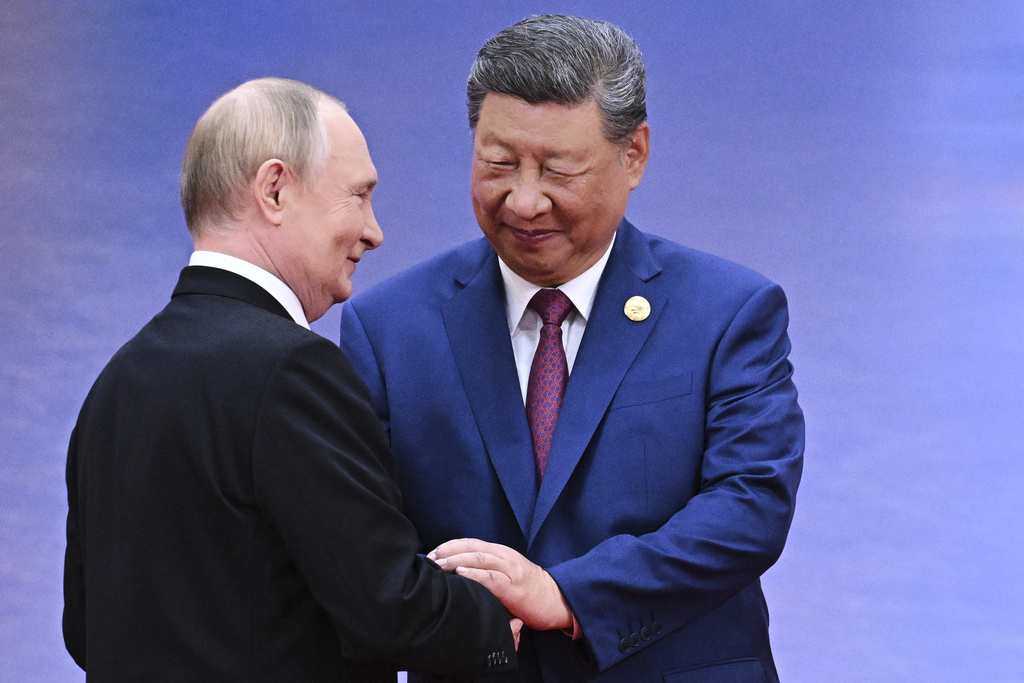
China and Russia have conducted a third round of joint missile-defense drills, demonstrating a deepening of their military coordination amid rising global security tensions.
The Gaze reports on it, referring to Reuters.
China’s Ministry of Defense stated that the exercises took place on Russian territory in early December and were not aimed at any third party.
Beijing emphasized that these maneuvers were not a reaction to any specific international events, framing them instead as part of regular military cooperation.
In recent months, China and Russia have intensified their defense contacts: in November, the two sides held talks on missile defense and strategic stability. This fits within the framework of the “no-limits” partnership announced in 2022, shortly before Russia’s invasion of Ukraine.
Earlier, in August 2025, Russian and Chinese naval forces launched planned joint maneuvers in the Sea of Japan, during which they practiced artillery firing and anti-submarine operations, demonstrating their readiness to coordinate and strengthen cooperation at sea.
Moreover, the growing supply of Chinese components to the Russian military-industrial complex shows Beijing’s willingness to play a key role in Russia’s defense production chain. Chinese engines, batteries, electronics, and especially fiber-optic cables have become critical for manufacturing new Russian strike and reconnaissance drones. The involvement of Chinese engineers in Russian defense enterprises is effectively integrating Chinese technologies into Russia’s armed forces.
Financially, China is increasingly shaping the economic foundation of Russia’s stability. The abrupt growth of yuan usage in Russia’s foreign trade and interbank operations, more than 40% of external transactions, has turned the yuan into a tool enabling the Kremlin to procure sanction-sensitive goods.
Meanwhile, mid-tier Chinese banks, intermediary companies, and structural “buffers” ensure that Russian manufacturers retain access to components that would otherwise be unattainable.
This allows Moscow not only to maintain but also to expand its military capabilities, with China’s technological support playing a decisive role.
Taken together, these developments point to the systematic construction of a long-term partnership that goes far beyond the official declarations of a “no-limits” alliance.
As The Gaze reported earlier, China plays a critical role in sustaining Russia’s military drone production by supplying approximately 80% of the essential electronics.
Read more on The Gaze: Why does China increase the supply of dual-use goods to Russia?