China's Shadow Fleet: Why Beijing Is No Longer Hiding with Russian LNG
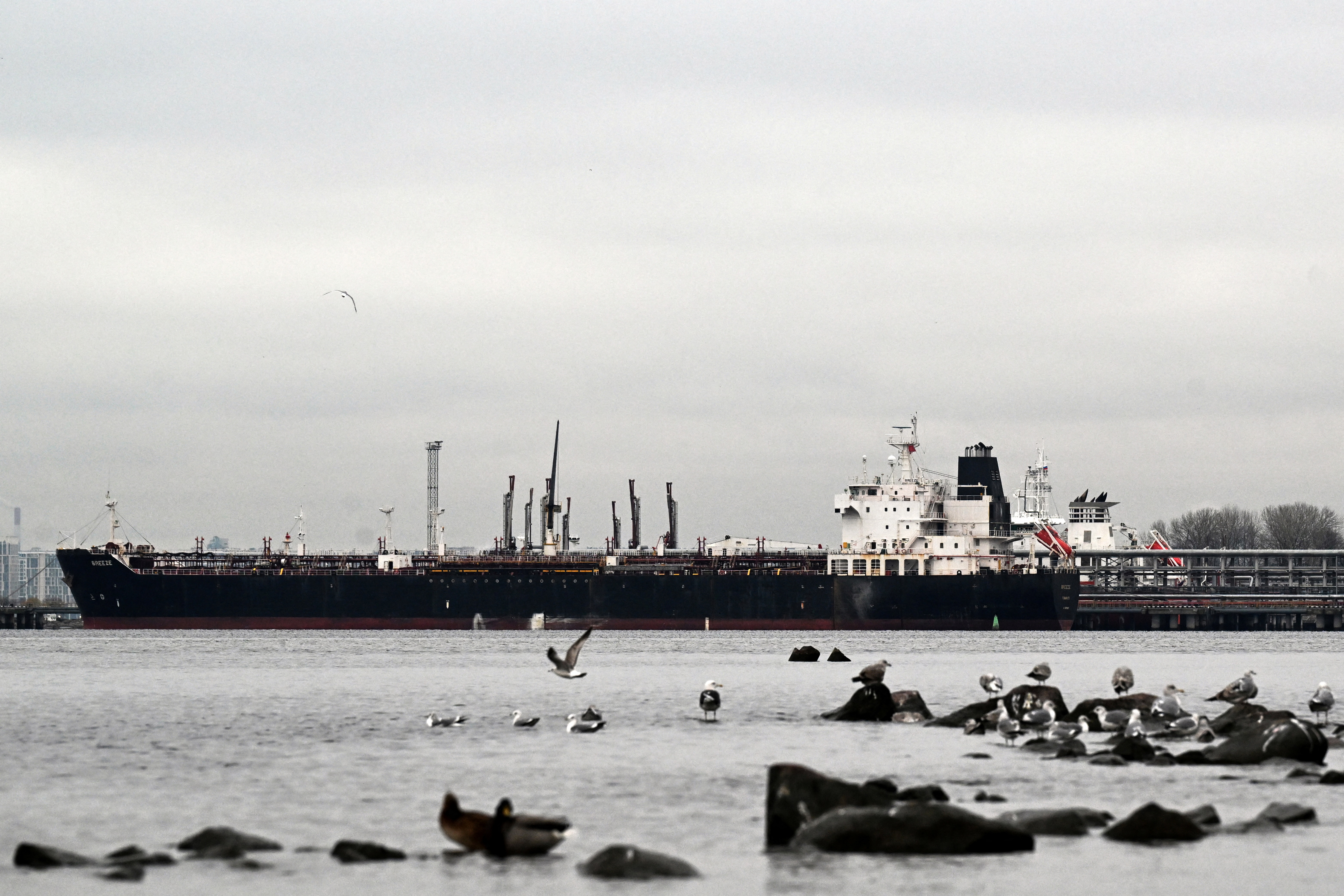
What was still a "gray zone" yesterday has today become official policy: China is building a parallel world LNG market in which Western sanctions apply only to those who voluntarily comply with them
Bloomberg published a material that unpleasantly surprised even those who have long considered China a "gray zone" in global energy. The article was about how Beijing is massively expanding its own shadow fleet – dozens of gas carriers with opaque owners, offshore structures, and disabled transponders – which are supposed to transport sanctioned Russian LNG from the Arctic and the Far East to Chinese ports. Formally, China does not violate sanctions: it simply "does not recognize" American and European restrictions. But in fact, this is no longer a diplomatic gesture, but a demonstrative logistical operation that knocks the props out from under the Western sanctions architecture.
It is important to understand the main thing: China is not just helping Russia. It is testing how far one can go in revising the rules of the world energy market. And Beijing is doing this not impulsively, but precisely now, when the Russian economy is most dependent on Asian buyers, and Washington is occupied with its own internal political turbulences.
At first glance, it is a logical step: the more ships – the more gas. In reality, however, the Chinese "shadow fleet" is a political tool that allows Beijing to turn Russian energy into a pocket supplier, and sanctions – into a formality that works only for the West, but not for those who are aimed at playing for the long haul.
How the Shadow Fleet Was Born and Why It Has Become Strategic Precisely Now
To understand Beijing's motives, it is enough to look at how China has behaved with other sanctioned goods over the past ten years. Beijing has used "gray" schemes long before Russia's full-scale invasion of Ukraine. The list includes Venezuelan oil, Iranian gas, "laundered" mixed batches of crude oil, hundreds of ships with fictitious registration that suddenly "disappeared" from radar somewhere near Singapore or Malaysia. But back then, it was about money. Now – it is about geopolitical architecture.
Sanctions against Arctic LNG-2 and other Russian projects have created a unique window of opportunities for Beijing. Russian LNG has become simultaneously cheap, structurally dependent on China, and critically important for the Russian budget. This is an ideal position for Beijing. It gets fuel at discounts, sets the rules of the game, and at the same time shows the West that energy discipline exists only within the boundaries of NATO and the EU. Everything beyond those boundaries lives by the laws of power, not norms.
After the November publication of Bloomberg, it became clear: Beijing is no longer hiding the fleet. It is transitioning from the tactic of "we know nothing" to the model of "this is how we work, and you can do nothing about it." Several gas carriers associated with Chinese structures have already been spotted near Russian terminals with disabled AIS – a classic scheme of shadow logistics that allows tracking only the general outline, but not specific routes or volumes.
This is not improvisation. This is institutionalized support: Beijing is preparing a long-term Russian LNG channel for itself that is not controlled by the West. This means that Russia is not just dependent on China; it is becoming its raw material appendage with minimal political maneuver.
The New Energy Order: Risks for the Market and the Failure of the Sanctions Model
The emergence of the Chinese shadow fleet is not just a continuation of Russian schemes with sea oil. It is a systemic threat to the entire sanctions model. Energy carriers are not a manual currency; they cannot be blocked by regulations if there is at least one large state that is ready to pay and provide logistics. China is doing exactly that.
In the short term, Beijing gets a cheap resource, Russia – money, and the US and EU – a problem with the effectiveness of pressure. But in the medium term, the consequences are much more serious.
First, China is forming a private transport system that does not depend on European insurers, classification societies, or ship regulators. This undermines the main lever of Western sanctions – control over the safety and insurance of sea transportation. Without these levers, sanctions turn into recommendations.
Second, the shadow fleet increases the risks of disasters, accidents, and environmental incidents. Gas carriers are not barges with crude oil; their technological risks are much higher. But China multiplies ships without checks, without certification, without guarantees. In fact, a parallel energy world is being created in which safety does not matter if it interferes with political maneuvering.
Third, China gains an unprecedented lever of influence over Russia. If Beijing decides tomorrow to "review the terms," Moscow will have no alternative buyers. This is not a partnership – it is controlled blackmail. China is not saving Russia from sanctions; it is making Moscow energy-dependent forever.
Fourth, the West must realize: the problem cannot be solved with new packages of restrictions. The shadow fleet is not afraid of sanctions because its owners from the very beginning build routes outside the jurisdiction of the G7. Other tools are needed – control of ports, pressure on Asian insurance markets, synchronization of regulations between the US, Japan, and South Korea. Otherwise, the Chinese model will become the new global norm.
China created the shadow fleet not because it lacks tankers, and not because Beijing wants to help Russia. The reason is simple: this is an element of the new energy architecture in which China seeks to become the center of decision-making, not the object of Western sanctions policy. The shadow fleet is a political tool, an economic lever, and a geostrategic test at the same time.
For Ukraine, this means that the struggle against Russian energy resources is no longer limited to Europe. It is moving to Chinese ports, gray zones of Southeast Asia, and Arctic routes, where the rules are set not by Washington, but by Beijing. And this front will be no less difficult than any military operation.
Bohdan Popov, Head of Digital at the United Ukraine Think Tank, communications specialist and public figure