Why Donald Trump is Interested in a Quick, Not Quality, Completion of the War in Ukraine
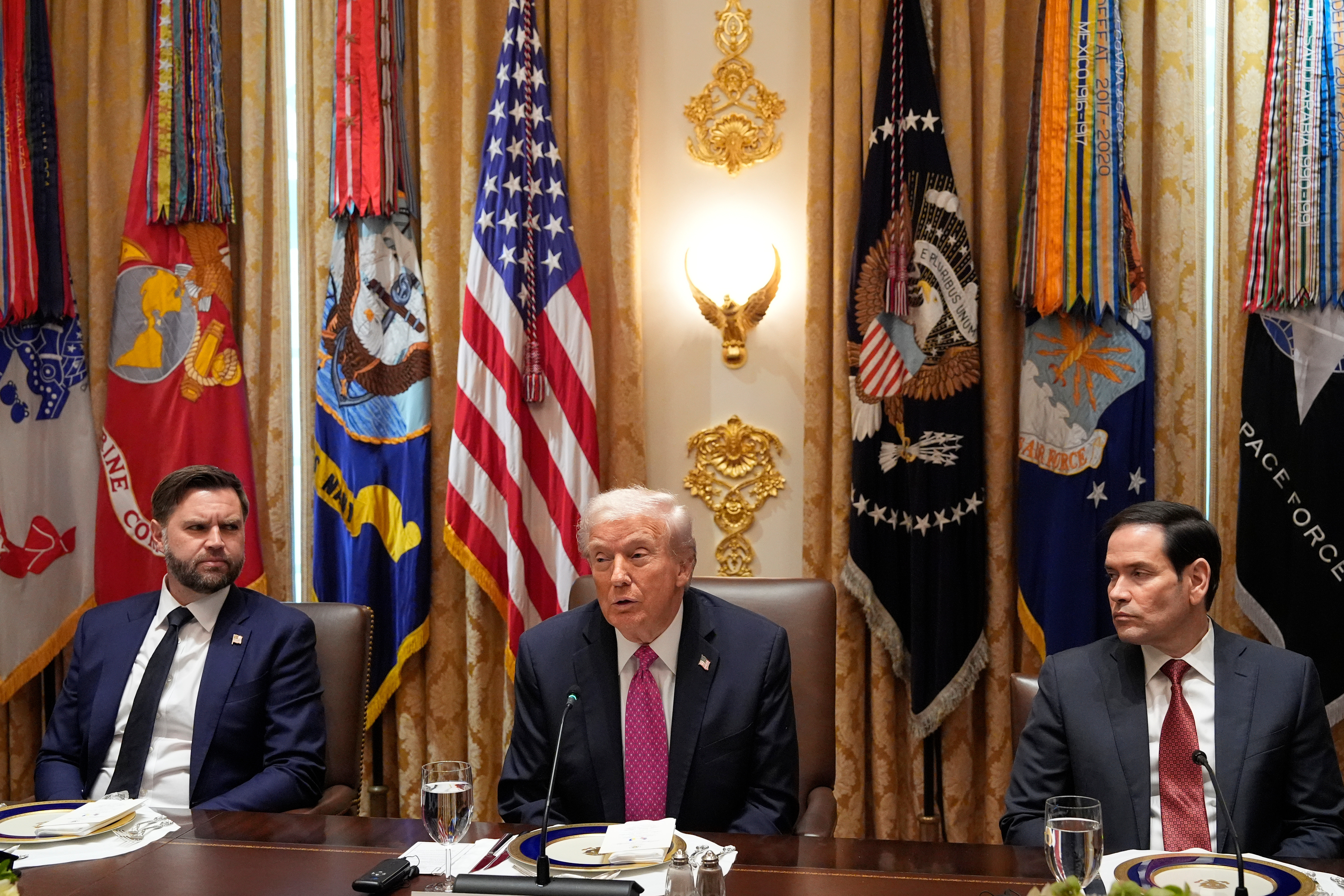
Internal Political Instability in Washington Pushes the White House Toward the Need to Quickly Remove the "Ukrainian Dossier" from the Table
The administration of Donald Trump is entering a phase of an internal political turbulent cycle, where every decision is considered not so much in the context of international strategy as through the prism of survival in Washington. The scandal surrounding the Epstein files, the wave of investigations, mutual informational attacks between factions of the Republican Party, and the constant pressure from Democrats form an environment in which Trump seeks to close all "problematic directions" as quickly as possible, those capable of draining political energy from the White House. Ukraine becomes one of such topics – a complex, costly, and explosively dangerous one from the point of view of American internal politics.
The strategic process of decision-making in Washington today lacks the traditional inertia of state institutions, which previously restrained the president's impulsive actions. The bureaucratic system is weakened, and the role of Trump's personal favorites, as shown by the case of Witkoff, is much greater than ever before. In this context, Trump sees the war in Ukraine as a problem that does not bring him electoral bonuses but creates political risks: any prolongation of the war automatically intensifies criticism regarding the "ineffectiveness of the new president." The result is a desire to demonstratively quickly "settle the conflict," even if the content of such a "peaceful solution" will be destructive.
There are no doubts in Washington that Trump wants to declare himself a "pre-eminent peacemaker," a person who "forced everyone to sit down at the table." In the internal political media cycle, this looks more advantageous than long-term investment in diplomatic and military plans. That is why the president's entourage does not hide that they are looking not for an optimal, but for a maximally quick finale – regardless of its quality.
The Desire to Close the Ukrainian Issue Creates a Dangerous Logic of Compromises in Favor of Russia
The scandal surrounding Steve Witkoff is an ideal example of how internal political pressure can transform U.S. foreign policy. Leaks of telephone conversations in which the American special representative essentially consults the Russian advisor Yuri Ushakov on how to act with Trump showed how deeply the White House has fallen into the logic of "let's just finish this at any cost." The logic boils down to one simple formula: if Russia agrees to negotiations, the U.S. will be able to announce peace, regardless of what exactly will be written in the treaty.
In such conditions, Ukraine becomes not a partner, but a variable in the internal political equation of the American president. This is a variable that can be adapted to one's own political needs: reduce demands regarding territories, agree to a "pause without guarantees," present a compromise as an "obligatory step for the sake of stability." For the White House, what is important is not whether the war will be completed qualitatively, but whether the president can demonstrate a quick result.
That is why Witkoff's plan – now completely discredited – looked as if it had been created in a Kremlin office: it provided for concessions to Russia on key territories, the creation of demilitarized zones, the actual recognition of Russian control over Donbas and Crimea. Trump could sell this as "the best deal in history," but the consequences of such a step would be catastrophic for the entire European security system.
Washington's Haste Can Create a New Wave of Aggression and Put Allies in a Situation of Strategic Vacuum
The greatest threat of a quick "peace" lies in the fact that it will actually create an opportunity for Russia to regroup, restore its military economy, and prepare a new phase of aggression. The Kremlin has already shown that it uses any pauses to build up forces. Any "truce without guarantees" will open a window of opportunities for importing technologies, rearmament, and financial stabilization.
Europe also loses positions in the case of a hasty American decision. If Washington tries to end the war at the price of Ukrainian interests, the continent finds itself before a difficult dilemma: either agree to American diktat or go into its own autonomous policy of containing Russia. Both scenarios mean a sharp leap in instability. Moreover, such actions undermine trust in American guarantees, which in the long term weakens the Western coalition.
The institutional structure formed after 2022 is designed for the long-term containment of Russia. It includes sanction pressure, the reconstruction of defense production in the EU, the strengthening of NATO's eastern flank, and the gradual expansion of security formats with Ukraine's participation. Trump's hasty decision ignores this entire architecture and puts at risk both the positions of allies and the world's trust in American foreign policy.
Speed Does Not Replace Quality, and Political Expediency Does Not Replace Strategic Security
The Ukrainian war has become an element of internal political struggle in the U.S. The greater the pressure on Trump due to scandals, the more the White House will try to find a quick solution that can be presented as a "success." But for Ukraine and Europe, such a solution may pose a strategic danger, since it does not solve the root of the problem – Russia's aggressive policy – but only temporarily masks it.
For Ukraine today, it is important not to agree to hasty formats imposed by Washington's political interests. Instead, it is necessary to demand full guarantees, stability, long-term mechanisms for containing Russia, and avoidance of repeating a situation in which the aggressor uses any "weakening" for the next strike.
A quick peace is not peace. It is a pause before a new war. And this is exactly what Trump, occupied with his own internal crises, does not want to see today. But Europe and Ukraine cannot afford such blindness.
Bohdan Popov, Head of Digital at the United Ukraine Think Tank, communications specialist and public figure