Russia Is Destroying Pokrovsk – A City That Gave the World “Carol of the Bells”
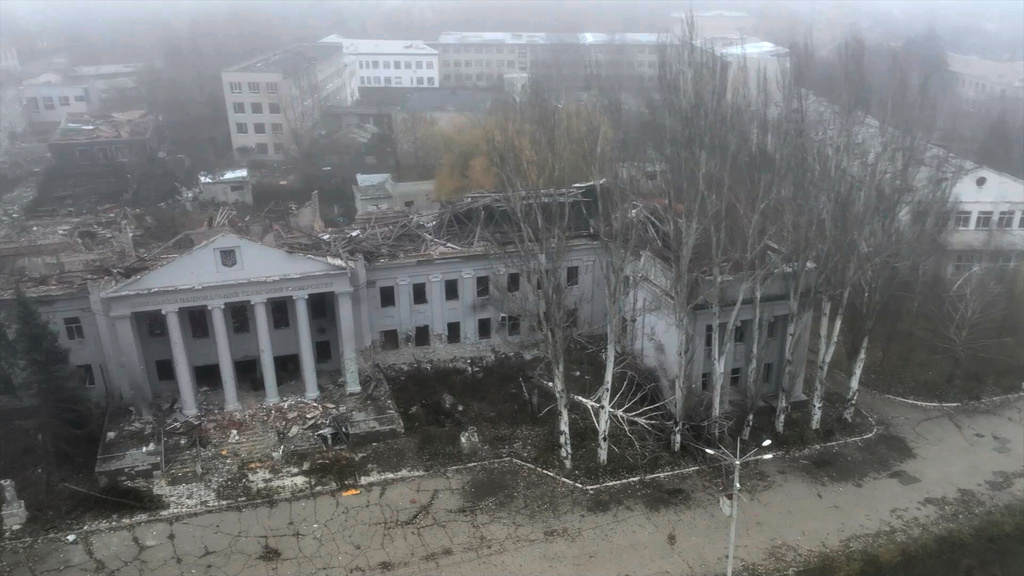
The devastated city of Pokrovsk has taken on a powerful cultural resonance for Ukrainians – not only as a battlefield, but as a place deeply linked to one of the world’s most famous Christmas melodies, Carol of the Bells.
The Gaze reports this, referring to Politico.
Known globally from films like Home Alone and television series such as Ted Lasso, the haunting tune originated as Shchedryk, a Ukrainian folk chant arranged by composer Mykola Leontovych more than a century ago. While Leontovych did not compose Shchedryk in Pokrovsk, historians say the city played a decisive role in shaping both his musical style and his political outlook.
In the early 1900s, Leontovych lived and worked in Pokrovsk, then a railway hub, where he taught music and led a workers’ choir. It was there, scholars say, that he immersed himself in Ukrainian folk traditions and developed the ideas that would later define Shchedryk.
“Pokrovsk was where Leontovych truly emerged as a composer and as a citizen,” said cultural historian Larysa Semenko. “It was also where Russian imperial authorities began to view him as a political threat.”
That suspicion would later prove fatal. In 1921, amid the Soviet crackdown on Ukrainian intellectuals following the collapse of the Ukrainian National Republic, Leontovych was assassinated by Soviet security agents – a killing that Ukrainians now view as part of a broader campaign to erase Ukrainian culture.
The song itself survived. First performed in Kyiv in 1916, Shchedryk was adopted by the Ukrainian National Republic as a form of cultural diplomacy. Touring choirs carried it across Europe and North America in the early 1920s, presenting Ukraine to the world as a distinct nation with its own traditions. In 1936, American composer Peter J. Wilhousky adapted it into English as Carol of the Bells, cementing its place in global Christmas culture.
More than a century later, Ukrainians see striking parallels between that era and the present war. Russian forces have been battling for control of Pokrovsk for more than 18 months, reducing much of the city to ruins. Moscow has claimed full occupation, though Ukrainian officials say their troops have recently regained parts of the northern districts and accuse Russian units of staging propaganda photos rather than holding sustained control.
“Our operations in the Pokrovsk area are ongoing,” Ukrainian army commander Oleksandr Syrskyi said this week, adding that Ukrainian forces had retaken roughly 16 square kilometers inside the city in recent weeks.
For many Ukrainians, the destruction of Pokrovsk feels symbolic – another attempt by Moscow to extinguish the cultural foundations of Ukrainian nationhood, just as it sought to do a century ago.
“Shchedryk was never just a Christmas song,” Semenko said. “It was and remains a message to the world about Ukraine’s identity, dignity, and refusal to disappear.”
As The Gaze reported earlier, the iconic Christmas melody “Shchedryk” by Mykola Leontovych is now permanently displayed at New York’s prestigious Carnegie Hall.
Read also on The Gaze: Russian Bombing on One of Christianity’s Holiest Days Sparks US Condemnation