Ukraine Eyes Semiconductor Independence With Ambitious Chip Plant Plan
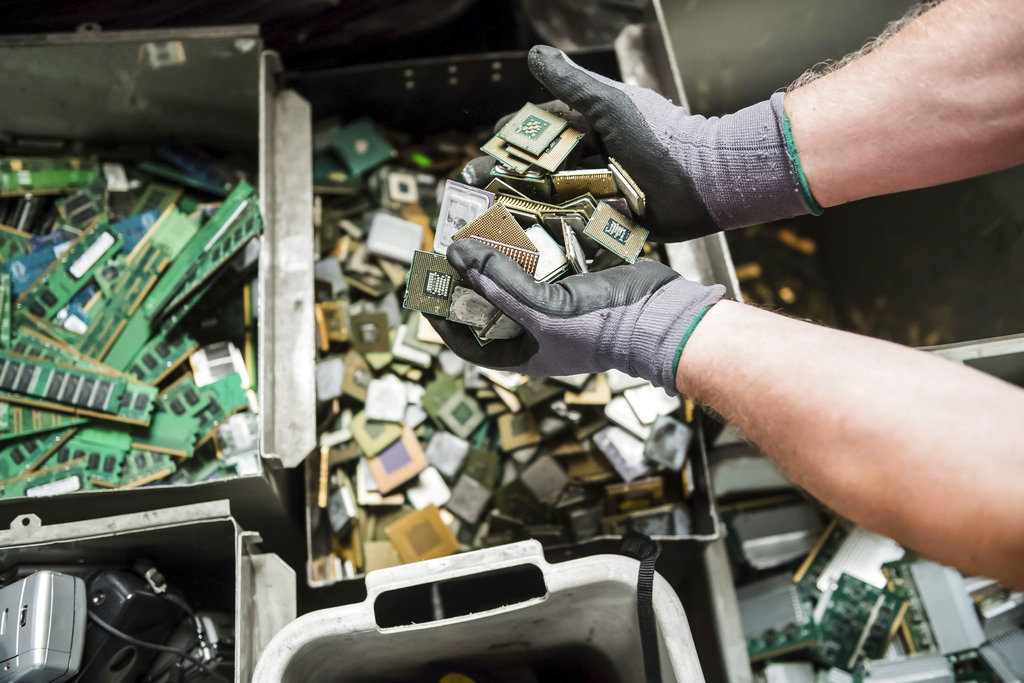
Ukraine is preparing to launch its first cleanroom for chip development and research in 2026.
The Gaze reports on it, referring to Militarnyi, citing DOU.
The cleanroom project has become one of the key elements in the implementation of the state strategy for the development of Ukrainian microelectronics.
According to Minister of Digital Transformation Mykhailo Fedorov, funding is provided by the Innovation Development Fund, and the probability of launch is already estimated at 80%.
The Kyiv School of Economics and the Swiss Technical University have joined the preparatory stage, forming the first research projects together with international partners.
The launch of the cleanroom will allow Ukraine to create a base for high-tech developments and lay the foundation for future microchip production.
At the same time, a draft law, the Chip Act, is being prepared, adapted to EU standards, aimed at integrating Ukraine into the European microelectronics market and regulating the industry according to Western rules.
The creation of infrastructure for microelectronics is part of a long-term strategy that the Ministry of Digital Transformation presented back in 2023 and which the Cabinet of Ministers officially approved in January 2025. The document provides for the construction of a full-fledged chip manufacturing plant by 2030 that should lay the foundation for the emergence of Ukraine's own high-tech industry and strengthen the state's defense and digital capabilities.
Microchips are critical for the production of drones, electronic warfare systems, thermal imaging cameras, and other military technologies.
Commercial chips are often not allowed to be used in dual-use or military products, and the manufacturer can block delivery at any time.
Having its own chip production in Ukraine would significantly increase the willingness of international partners to cooperate with Ukrainian defense companies. It would also allow Ukraine to influence the price-quality ratio.
Chinese chips are cheap but unreliable and are supplied to Russia on a massive scale; Western chips are of much higher quality but are many times more expensive. Domestic production would help to significantly reduce the cost of equipment.
As emphasized by engineers from the Ukrainian company gj, which manufactures thermal imaging cameras for UAVs, ground robotic systems (GRS), and other defense systems, Oko Camera, creating an infrastructure for semiconductor production in Ukraine is not only an economic project but also a strategic condition for long-term success.
“Whoever controls microelectronics can win the war,” concludes the CTO of Oko Camera.
At the same time, Russia makes extensive use of dual-use technologies, purchasing civilian microelectronics, chips, and high-precision equipment around the world and integrating them into its military systems, effectively bypassing international sanctions.
As The Gaze reported earlier, China has emerged as a crucial supplier of dual-use goods that directly sustain Moscow’s war machine, having exported more than $4 billion worth of dual-use items to Russia in 2024.
Read more on The Gaze: Why does China increase the supply of dual-use goods to Russia?