Behind the Curtain: How Belarus Uses China and the US to Limit Russian Influence
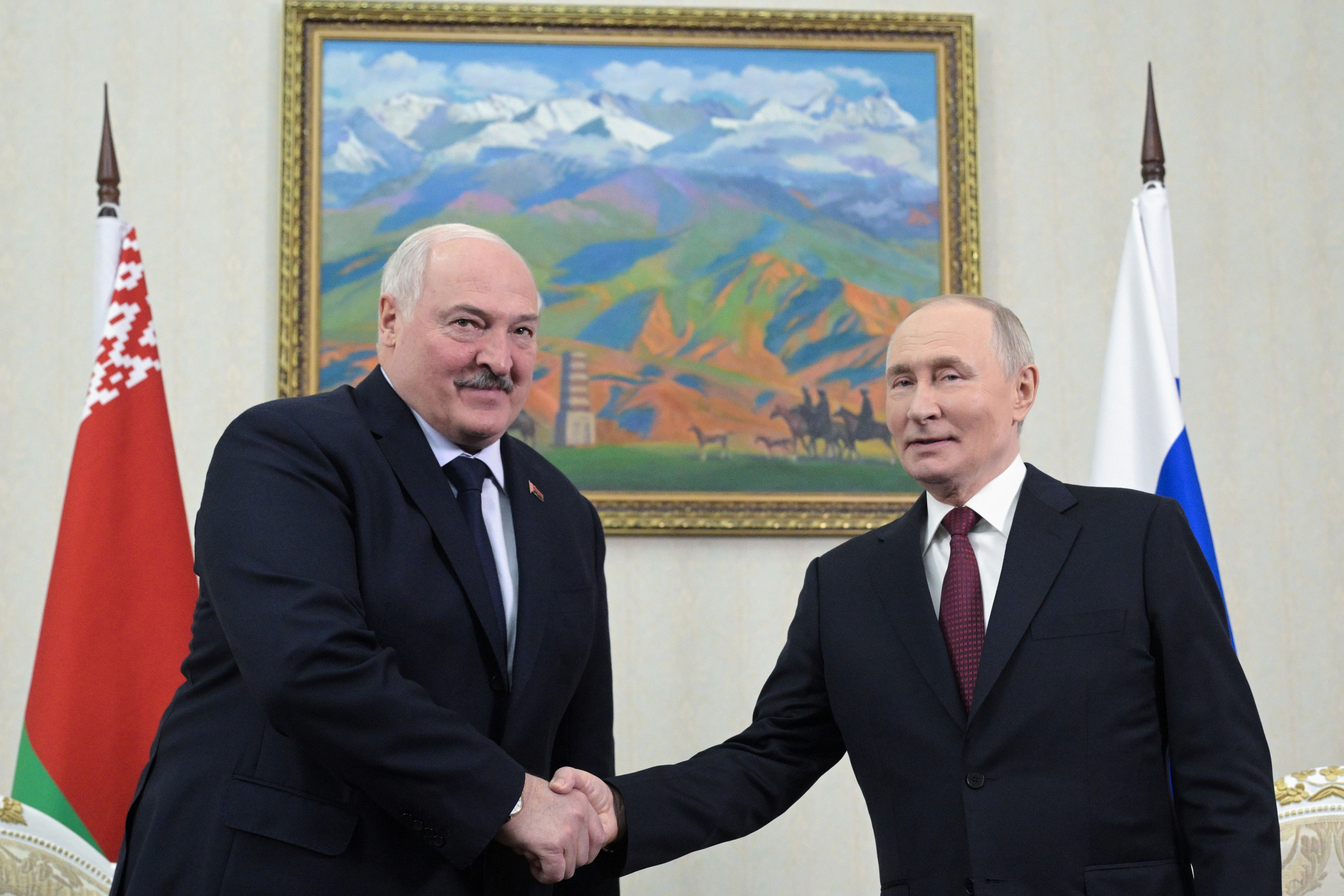
Belarus today finds itself at a point where its internal logic of survival pushes its leader Aleksander Lukashenko toward paradoxical maneuvers.
Formally, Minsk is the closest political and military ally of the Russian Federation, a country-participant in the aggression against Ukraine, and fully integrated into the Russian security space. But Lukashenko's real behavior over the last two years demonstrates a different trajectory: gradual distancing from Moscow, growing dependence on China, and constant signals to Washington about readiness for a partial reboot of relations.
The form of this maneuver is well familiar to regimes that have found themselves in complete dependence on one empire and are trying to compensate for this by maneuvering between other centers of power. Lukashenko is playing the same game that he already played in the 2000s: balancing between the Kremlin, Beijing, and the West. But the context has radically changed.
After 2020, the internal legitimacy of the regime is destroyed, the economy is held up by injections from the Russian Federation and Chinese loans, and Belarusian sovereignty in the security sphere exists rather nominally. Therefore, the current "flirting" with the West is not a return to the policy of multi-vectorism, but an attempt to reduce the level of pressure from Russia and obtain additional channels for maneuvering at a moment when Moscow itself is weakened by the war in Ukraine.
Beijing Has Become the Main Donor of Belarusian Resilience, but at the Same Time and the Main Controller of Its High-Tech Military-Industrial Complex
The key to understanding the current processes is the Chinese presence. Over the last five years, Belarus has become one of the most dependent on the People's Republic of China economies in Eurasia. Chinese loans, the Great Stone industrial park, investments in the assembly of trucks, electronics, components for light and heavy industry, as well as in the military-industrial complex have created a new architecture of Belarusian dependence, which is now no less significant than the Russian one.
At the same time, it is precisely the military-technical partnership with the People's Republic of China that has become the element that has fundamentally changed the balance of power between Minsk and Moscow. The Belarusian military-industrial complex, together with Chinese corporations, over the last years has produced a number of high-tech systems—from missile complexes to long-range unmanned aerial vehicles, electronic warfare systems, and mobile radars. But the principal point is that these systems are not transferred to the Russian Federation, and are not even sold to it.
Minsk not only avoids transferring technologies but also cannot do this without permission from Beijing. China strictly controls export policy regarding products created in cooperation with Chinese companies. High-precision missiles "Polonez"—a modification based on the Chinese A200; most of the new Belarusian UAVs are joint developments with Chinese manufacturers; modern radar and electronic warfare systems contain Chinese optics, microelectronics, and software modules.
Thus, a structural barrier is formed: Minsk can cooperate with the Russian Federation in political statements, can provide logistics and territory, but it becomes unable to fulfill the role of a technological donor to the Russian army. The People's Republic of China is not interested in transferring its technologies to Moscow—not only because of fear of sanctions, but also because Beijing does not want to help Russia become stronger. The Chinese formula has long been clear: the People's Republic of China gives Russia exactly as much as it needs to fight, but not as much as to win. A strong, autonomous, self-sufficient Russian Federation is not needed by China. What is needed is an exhausted state dependent on Chinese exports, which cements its own dependence on Beijing every year.
Belarus in this context becomes part of the Chinese strategy: Beijing gives Lukashenko technologies, investments, and certain political protection, but strictly controls so that none of these advantages is transferred to the Kremlin.
Flirting with the USA Is Not an Attempt to "Change Camps," but a Signal About Lack of Trust in Moscow
In 2024–2025, Belarusian diplomacy has gradually activated contacts with the USA, using several tactical emphases. Minsk directly hints to Washington: Lukashenko does not want to turn into a fully absorbed Russian protectorate. The Belarusian regime demonstrates a lack of intention to participate in a deeper phase of the war against Ukraine. Lukashenko publicly repeats the thesis that the Belarusian army will not fight against Ukrainians, although it provides the Kremlin with logistics and air bases. This is not a good gesture, but a pragmatic signal—he does not want direct involvement.
In parallel, Minsk uses the old game: to show Washington that Belarus can be a less toxic element in the Russian orbit if it is given at least some prospect for maneuvering. Lukashenko is trying to convince the USA that he remains a subjective player and is capable of restraining part of the most aggressive Russian initiatives on Belarusian territory. At the same time, he very much hopes that Washington will recognize: weakening the Kremlin in Eastern Europe is possible not only through the front in Ukraine, but also through the gradual cutting off of Belarus from deep Russian integration—primarily in the security and military-technical sectors.
This logic is not new. In 2009–2014, Lukashenko actively used the conflict between the Russian Federation and the West to receive dividends both from Brussels and from Washington. But today the stakes are different: the regime is completely dependent on Russia economically and militarily, and the repressive machine after the 2020 protests has destroyed all internal possibilities for legitimacy. Therefore, flirting with the USA is not an attempt to become a "neutral" country. It is an attempt to prepare a backup scenario in case the Russian Federation weakens so much that it ceases to be a guarantor of the regime's survival.
Lukashenko Tries to Reduce Dependence on Russia, but Is Unable to Break Its Fundamental Mechanisms
Today, Minsk is trying to limit Russian influence in three ways: first, through the Chinese umbrella, which allows balancing Russian economic control; second, through diplomatic signals to the West, particularly the USA; third, through unwillingness to fulfill the role of a technological donor for the Russian military-industrial complex.
At the same time, he does not break the key dependence—military. On the territory of Belarus, Russian instructors, air defense units, aviation contingents, special services, and command systems are stationed. Lukashenko does not control strategic infrastructure: over the last three years, Moscow has created a hybrid model of joint command on the territory of Belarus, where the Belarusian army formally retains sovereignty, but real power in critical issues belongs to Russian structures.
Therefore, his "flirting" cannot have a strategic character. This is a tactic of survival, not a course toward geopolitical reorientation.
However, even in the tactical dimension, there is an important consequence: Lukashenko has ceased to be an unconditional executor of Russian decisions. He does not help the Russian Federation strengthen its military-industrial complex with high-tech systems, he demonstrates readiness for niche dialogue with the USA, and he is increasingly clinging to Chinese support, which limits the Kremlin's possibilities to turn Belarus into a fully absorbed territory.
Lukashenko's regime survives not thanks to Russia, but thanks to the fact that it has learned to play dependencies against each other. China provides economic oxygen and technological control. Russia provides a military "umbrella." The USA is used as a signal to Moscow: Lukashenko has not yet completely disappeared as a subject. But the fundamental balance is simple—Moscow for Lukashenko is a threat no less than for the West. And the deeper the Russian defeat in Ukraine becomes, the more actively Minsk tries to seek valves for escape from complete absorption.
Anton Kuchukhidze, political scientist and foreign policy analyst, expert at the “United Ukraine” Think Tank