In Turkey, a 2000-Year-Old Statue of 'Dancing Muse' Unearthed
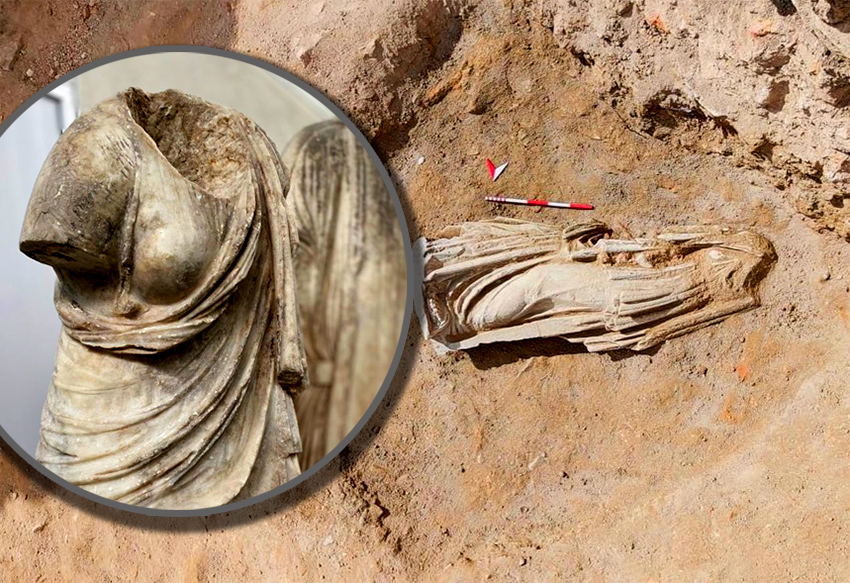
In the ancient city of Stratonicea, located in the Turkish province of Mugla, archaeologists have discovered a statue of a 'Dancing Muse.' The 2175-year-old artwork was found during excavations inside the frigidarium of a Roman bath, with the statue lacking both arms and a head, as reported by Arkeonews.
According to a statement from the Ministry of Culture and Tourism of Turkey, the found statue is the only original work of its kind from the Hellenistic period. Similar statues were traditionally crafted by Philiskos, a renowned sculptor from the 2nd century BCE. While reproductions of this Roman-era masterpiece exist throughout Anatolia and Greece, the recently discovered statue from Stratonicea is the only authentic work by Philiskos.
Information about Philiskos is currently limited, but he was known for his bronze sculptures, actively creating art in the 2nd century BCE and hailing from Rhodes, a center of artistic innovation during that time. Philiskos is often mentioned in historical records for his skill in portraying movement and anatomical precision in his sculptures. Despite none of his original works surviving, archaeologists rely on written accounts and references from other ancient authors to understand his artistic mastery and contribution to Hellenistic sculpture.
The discovery of the statue in Stratonicea is significant for archaeologists, demonstrating Philiskos's artistic presence in the ancient city during the Hellenistic period, indicating the widespread influence of his works in the ancient world. The find will also contribute to a better understanding of the creativity of the ancient sculptor.
Previously, The Gaze reported that Ukraine has returned 14 ancient artifacts, likely stolen by Russians from the occupied territories, and attempting to smuggle them illegally to the USA. Among the cultural treasures returned to Kyiv are samples of ancient weapons ranging from the Neolithic era to the Middle Ages.
Currently, researchers are working to establish the exact origin of the recovered items and their previous storage locations. According to the main version, these artifacts were looted by Russians from museum collections in the occupied territories of Ukraine.