Freeze Russian Assets Indefinitely
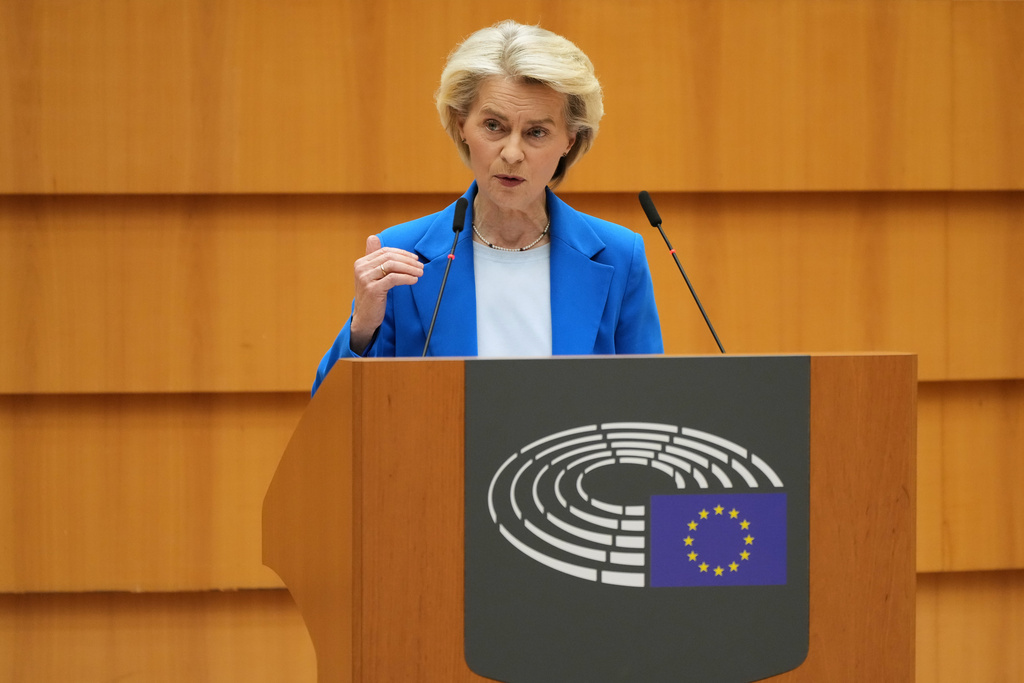
How the EU is rushing to outmanoeuvre Orbán.
The Gaze reports on it according to FT.
They want to make a decision before next week's EU leaders' summit.
EU countries want to speed up the decision to freeze Russian assets worth up to €210 billion indefinitely, trying to ‘bypass’ Hungarian Prime Minister Viktor Orbán before European leaders gather for a summit next week, the FT writes.
According to officials, the rushed campaign to pass legislation granting extraordinary powers to override national vetoes on extending sanctions is aimed at protecting Brussels' influence in the US-led peace talks on Russia's war against Ukraine.
Diplomats involved in the legislation see an advantage in quickly resolving the contentious issue of Russian assets in the coming days, separating it from the debate on providing Ukraine with loans secured by frozen Russian funds. The financing issue will be left to EU leaders to decide next week.
The decision to vote within the next week, which violates the principle of unanimity in decision-making on sanctions, risks angering Hungary and other EU countries that oppose the measure. Previous instances of EU countries voting in this way despite the position of other member states on critical issues, such as Poland and Hungary on migration policy, have caused years of animosity between capitals.
Last week, the European Commission proposed using €210 billion in frozen Russian assets held in a Belgian depository to finance a loan to Kyiv, initially for €90 billion, which could be paid out over the next two years. For the lending scheme to work, the assets must be frozen indefinitely, rather than for six months, after which the freezing of these funds can only be extended with the unanimous consent of all 27 EU countries.
Hungary, the most pro-Russian EU country, opposes any further aid to Kyiv and regularly threatens to veto the extension of sanctions against Russia. EU officials fear that Orbán will carry out his threat if the administration of US President Donald Trump decides to unilaterally lift American sanctions against Russia.
Hungarian government spokesman Zoltán Kovács said this week that the European Commission's loan proposal ‘crosses all red lines.’ To avoid the risk of sanctions being lifted, the EC has proposed using emergency powers designed to combat economic crises to make sanctions against Russian assets indefinite. Approved in accordance with Article 122 of the EU treaties, such powers can be applied after approval by a simple majority of EU countries, bypassing potential vetoes.
The application of sanctions will also be a sign of protest against Washington. The initial peace plan for Ukraine, partly developed by US officials, envisaged investing most of Russia's frozen assets in two US-led investment funds. US officials also tried to persuade EU capitals not to use Russian assets until a peace plan was agreed.
Belgium, where Euroclear, which holds €185 billion in Russian assets, is located, opposed the loan, citing legal and financial risks. The country fears that if sanctions are unexpectedly lifted, it will have to respond to Russia's legal claims on its own. Belgium is demanding ironclad guarantees that other EU states will agree to share responsibility and split the costs of any lawsuits against it or Euroclear. The EC has considered ‘almost all’ of Belgium's demands regarding the loan, said European Commission President Ursula von der Leyen.
As the Gaze reported earlier EU Commission Proposes Using Frozen Russian Assets to Fund Reparations for Ukraine.