Norway’s Independent Funding Plan for Ukraine Gains Momentum as EU Deadlock Persists
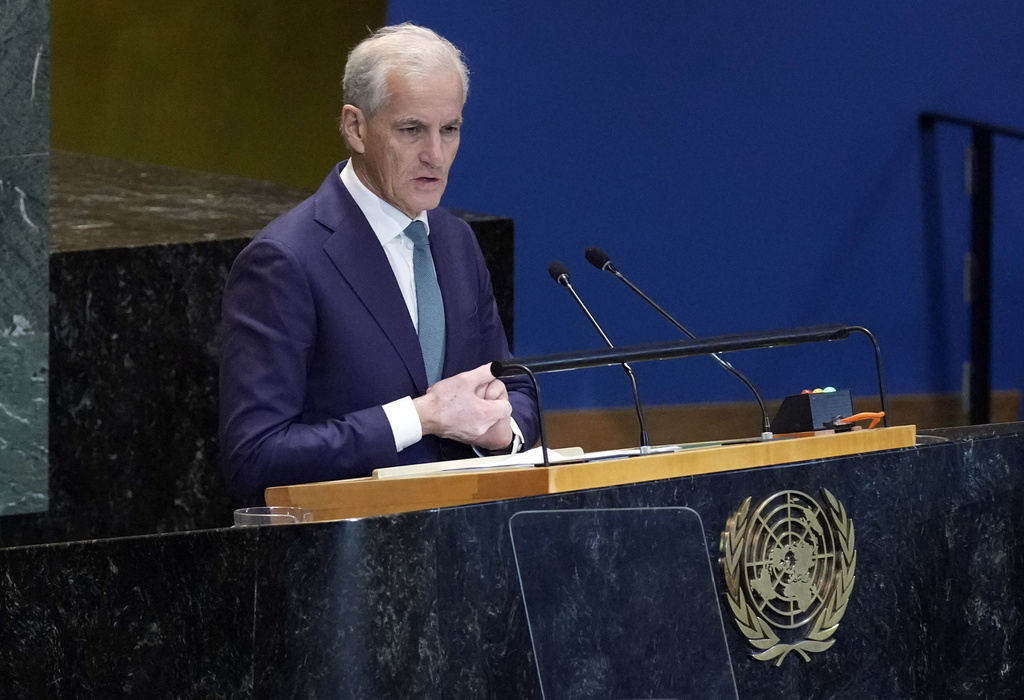
Norway is emerging as an unexpected driver of long-term financial support for Ukraine, offering a model that could circumvent the European Union’s prolonged disputes over frozen Russian assets. According to analysts, a proposal circulating in Oslo to establish a standalone Norwegian fund worth tens of billions of euros is rapidly shifting from a theoretical concept to a serious geopolitical alternative.
In his new article for The Gaze, foreign policy expert Dmytro Levus notes that the idea, first promoted by Norwegian economists and political figures, envisions an autonomous mechanism capable of providing up to €100 billion in support for Kyiv. “What makes this proposal powerful is that Norway’s financial capacity and geopolitical logic uniquely align – unlike in the EU, where bureaucratic and economic interests collide,” the expert argues.
Norway’s Sovereign Wealth Fund, valued at more than $1.6 trillion, the largest in the world, gives Oslo unparalleled flexibility. The fund generates tens of billions annually, and, as Levus emphasizes, a portion of its returns could be redirected to Ukraine “without any macroeconomic risk.”
Crucially, Norway operates outside EU fiscal procedures and therefore avoids the gridlock that has stalled European decisions on using Russia’s frozen assets. Levus underlines that Norway’s strategic calculation is equally significant: the country shares one of NATO’s longest borders with Russia and sees Ukraine’s resistance as vital for the stability of Northern Europe.
“This would be Europe’s workaround to its own institutional limitations,” Levus observes. A Norwegian fund could operate with a 10–20-year horizon, offering Ukraine stable budgetary and investment planning – something neither the EU nor the United States can guarantee due to political cycles.
If implemented, the Norwegian fund could reshape Kyiv’s entire support architecture. According to Levus, Norway’s assistance would not depend on U.S. political oscillations or EU infighting, Norwegian society shows sustained backing for Ukraine due to clear geopolitical stakes, and Oslo’s global reputation as a credible mediator and financier would boost investor confidence in Ukraine’s postwar recovery sectors – energy, renewables, extraction, and defence.
Levus clarifies that Norway’s proposal is not intended to replace American or European assistance but to strengthen the overall architecture of support. As EU reforms stall and U.S. priorities fluctuate with electoral cycles, an autonomous Norwegian mechanism could provide continuity and resilience.
“Norway offers exactly what is missing in the support system – long-term sustainability, resilience, and independence from political crises,” Levus concludes. “In many ways, this initiative is a test of the West’s ability to adapt to wartime realities.”
Read the full article on The Gaze: Norway’s Funding Mechanism for Aid to Ukraine: A Game-Changer