Strike on Novorossiysk: When Russia’s Oil Export Finally Faltered
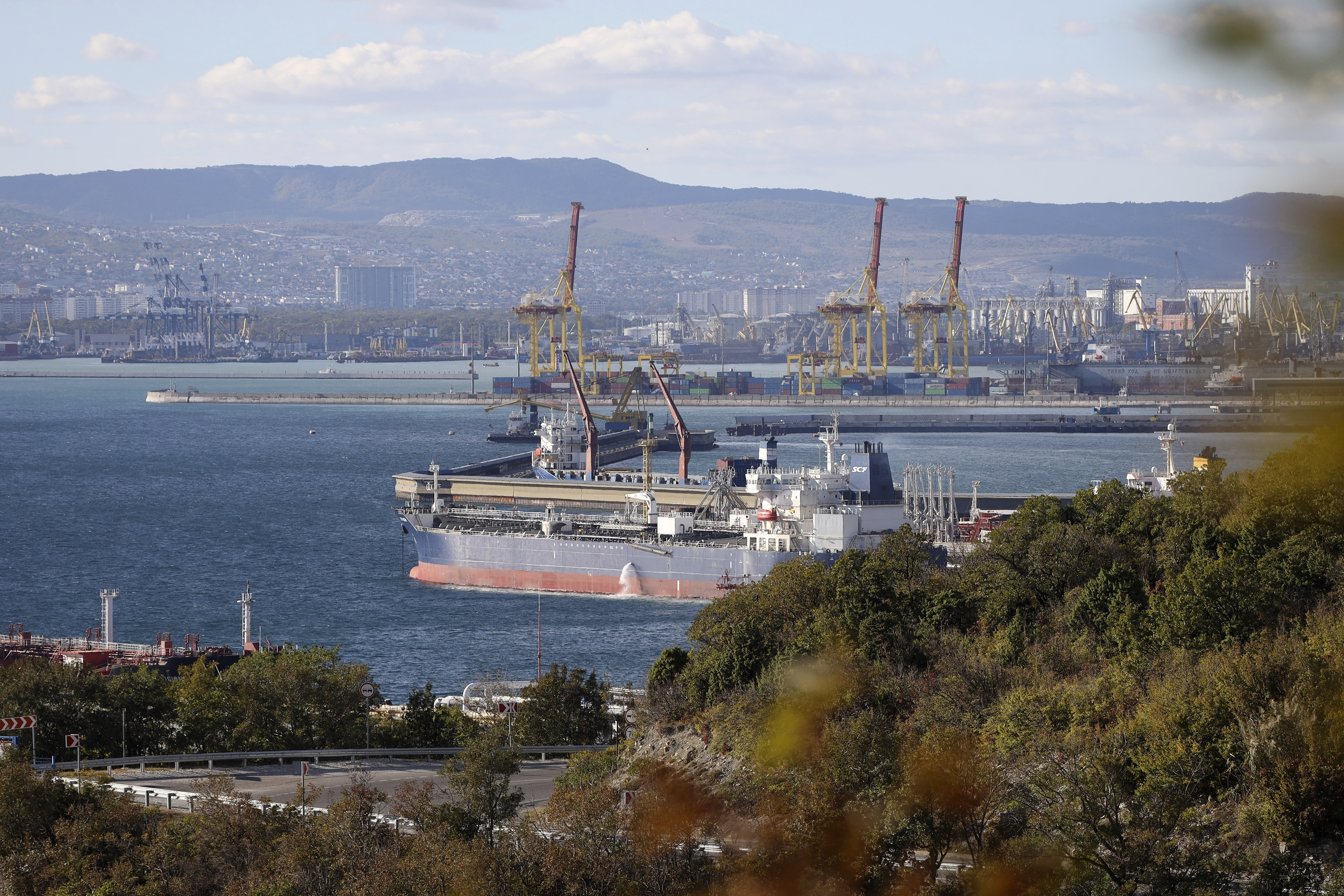
Strike on Novorossiysk not only slowed down oil loading – it is a painful loss for Russia's currency reserves, which threatens the loss of partners' trust and changes in global conjuncture
The strike on the Novorossiysk terminal “Sheshkharis” in November is an event that Russian propaganda, to the extent possible, is trying to hush up. The reason is obvious: this point has been hit dozens of times, but it is precisely now that the strike turned out to be more tangible than the previous ones.
Satellite images have recorded damage to two berthing lines and equipment of the pumping station, after which oil loading through the port slowed down so much that tankers began to accumulate in the water area. For the Black Sea basin, this is not news, but for the Kremlin – a very painful reminder that “inaccessible objects” do not exist.
Russia has been boasting for years about diversified logistics, but reality is much more primitive: Novorossiysk is one of the few ports where large batches of Urals can be shipped to Asia without extra costs. Baltic routes are more expensive, northern ones – more complicated, and through the Far East, only limited volumes can be sent. Therefore, any failure in Novorossiysk is an automatic strike on the Russian currency cushion. That is why the story with “Sheshkharis” deserves a separate analysis: here, for the first time in a long time, the economic vulnerability of Russia became obvious even to its closest trading partners.
Why “Sheshkharis” Is the Weakest Link in Russian Energy Sector
The symbolism of this attack lies not only in the fact that they hit an object that Russia considers critical. The problem is much deeper: the structure of Russian oil export is built in such a way that “Sheshkharis” plays the role of a node where several flows converge at once. Raw materials from the Volga region, from Western Siberia, as well as transit Kazakh oil converge here. The terminal is actually the endpoint for millions of tons of monthly export, which the Kremlin uses as the main budget donor.
The strike destroyed part of the equipment that ensures a stable pace of tanker loading. It is the pace – this is the key word. Russia can declare a hundred times that “everything is operating in normal mode,” but every hour of downtime is a drop in volumes by tens of thousands of barrels, and every day is a loss in millions of dollars even without taking into account the increase in the Urals discount.
No less important is the insurance factor. After the strike, insurance premiums for tankers entering Novorossiysk sharply increased, and this is not a joke, but a standard market reaction. Insurers do not fight, but they know perfectly well where the risks are.
If two or three such strikes are repeated, the port risks moving to the category of “high-risk regions.” This will make logistics for Russia practically unmanageable: either pay three times more, or curtail export plans.
It is also interesting that after the attack on “Sheshkharis,” the Russians had to transfer part of the loading to alternative berths, which were never designed for a flow of such scale. These nodes physically do not provide the speed of filling tankers needed for continuous export operation. As a result, Russia either cuts volumes or loads tankers partially, which increases the fleet turnover time. This is already not a tactical, but a structural failure.
How Systemic Strikes Can Undermine Russian Oil Export
The most important thing is not the fact of the damage itself, but the fact that Russian logistical problems are superimposed on the global conjuncture, which has begun to play against the Kremlin. In November, the Urals price again sagged to the lowest levels in the last three years due to falling demand and increasing supply risks.
The strike on “Sheshkharis” only intensified the trend, forcing traders to include an additional risk premium in every batch. And when the risk becomes permanent, not only the barrel price begins to fall, but also the level of willingness of counterparties in general to work with Russian oil.
The Black Sea corridor has become the most important route for Russia in 2024–2025, because it was through it that the largest batches went. But what will happen if the scheme “strike – repair – restoration – new strike” repeats regularly? Russia will be forced to reorient to the Baltic, where weather and logistical restrictions make export more expensive and slower. This will again increase the discount and reduce profitability.
Another aspect is Kazakhstan. Its oil constitutes a significant part of the flow through Novorossiysk, and if insurance companies or traders begin to demand additional guarantees, Astana may activate projects to diversify routes bypassing Russia. If Kazakhstan leaves Novorossiysk, the loss of the flow will become a blow not to tactics, but to the Russian status as a transit country. This is a political defeat that the Kremlin fears much more than temporary forced repairs.
It is impossible not to take into account the influence of Western technical support for Ukraine, which ensures ultra-precise planning of such operations. Damage to objects like “Sheshkharis” no longer looks like a coincidence or a one-time breakthrough. This is an element of the new architecture of war, where attacks on infrastructure that ensures the aggressor's financial flows acquire strategic significance. If the strikes continue, Russia will not be able to compensate for them either with repairs or route reorientation, because it will lose the key thing – market trust.
The damage to “Sheshkharis” is not a single news item, but the first serious bell about the fact that the war has entered the phase of pressure on the Russian energy sector. Several such operations are capable not just of slowing down Russian export, but of becoming a catalyst for a systemic crisis, where low prices, high risks, and logistical restrictions will work against Moscow simultaneously. And it is this scenario that now looks more realistic than any statements from the Kremlin about “full control over the situation.”
Bohdan Popov, Head of Digital at the United Ukraine Think Tank, communications specialist and public figure