Norway’s Funding Mechanism for Aid to Ukraine: A Game-Changer
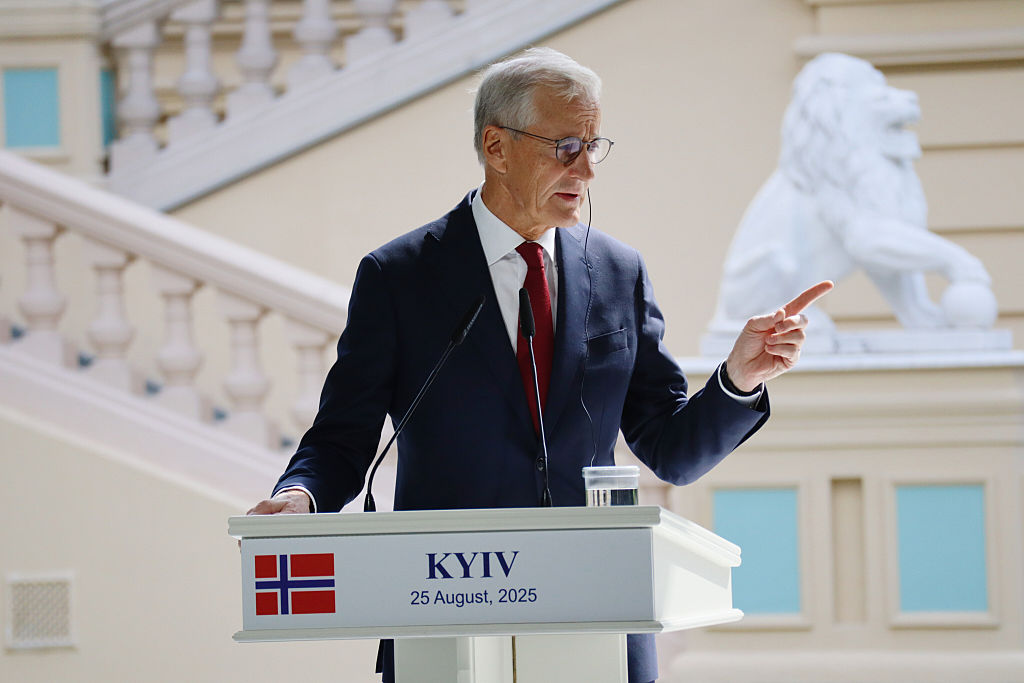
While the EU Is Bogged Down in Bureaucratic Disputes Over Russian Assets, Norway Can Offer a Radical Way Out: An Autonomous Fund of Tens of Billions for Long-Term Assistance to Kyiv
The idea of a separate Norwegian funding mechanism for Ukraine has transformed over the past months from a political hypothesis into a subject of serious discussion in Europe's financial and diplomatic circles. It was first publicly voiced by Norwegian economists and politicians, who openly called on the government to provide an independent support instrument for Ukraine amounting to up to 100 billion euros. It sounds ambitious, but this is one of those rare cases where the political narrative and financial reality do not contradict each other.
In parallel, the European Commission continues its deadlocked dispute with Belgium regarding the use of frozen Russian assets amounting to about 140 billion euros. It is precisely in this context that the Norwegian proposal appears not only realistic but also necessary. It effectively offers Europe a way out of the bureaucratic trap and creates a new format for long-term support of Ukraine outside the boundaries of the EU's internal political conflicts.
Norway Has a Unique Financial Resource Capable of Providing Long-Term Funding for Ukraine Without Harm to Its Own Economy
The fundamental reason why this idea does not seem utopian is that Norway is perhaps the only country in Europe that has a surplus of financial resources and the structural capacity to support external programs at the level of tens of billions of dollars. Norway's Sovereign Wealth Fund is the largest in the world, with over 1.6 trillion dollars in assets. This is more than the GDP of France, Italy, or Spain. The fund generates annual income from 80 to 120 billion dollars depending on market conditions, and even in crisis years, it remains profitable.
The basis of the Norwegian argument is very simple: a portion of these incomes can be allocated to funding Ukraine without any risk to the country's macroeconomic stability. Norway is not a member of the EU and therefore is not bound by European budgetary procedures, which are blocked by internal vetoes. It can create its own financial mechanism – an analog of a separate stabilization fund – and transfer funds without the need to pass decisions through 27 countries with veto rights.
One more detail that is often underestimated: Norway is interested in this geopolitically. It has the longest border with the Russian Federation among NATO countries (after Finland) and perfectly understands that the security of Northern Europe directly depends on the outcome of the war in Ukraine. Unlike many European players, Oslo does not engage in symbolic politics. For Norway, this is not a question of abstract "European values," but of the direct defense of its own region.
The Norwegian Mechanism Could Become a Response to Europe's Inability to Make Decisions Regarding Russian Assets
The current situation with 140 billion euros in frozen Russian assets in the EU demonstrates how fragile Europe's financial architecture is. Belgium is blocking the decision not for political reasons, but for internal economic ones – the country receives profit from the placement of assets in Euroclear and does not want to lose its financial advantage. And while the EU argues, Ukraine needs about 40 billion dollars in external funding annually to cover the budget, defense expenditures, and the restoration of critical infrastructure.
The Norwegian mechanism completely removes this problem. It can operate autonomously, it does not fall under the EU's internal rules, and it can be agreed upon faster than any European decision that requires consensus. In a certain sense, Oslo is offering Europe what Europe itself is unable to do due to excessive institutional complexity: an accessible, fast, flexible, and predictable financial instrument.
This also solves another key problem – the planning horizon. The European Commission can make decisions for 2–3 years, but not for decades. Norway is capable of immediately creating a fund with a 10–20-year horizon, which will give Ukraine the financial predictability that is currently lacking for investments in reconstruction, defense programs, the production of drones and missiles, as well as infrastructure megaprojects.
For Ukraine, This Is Not Just a New Funding Channel, But a Possible Structural Shift in International Support
The emergence of the Norwegian mechanism changes several basic parameters. First, Ukraine receives a donor model that does not depend on the political cycles of the United States and the internal conflicts of the EU. This is critically important because Kyiv is currently financially dependent on the two most polarized political environments in the West.
Second, Norway is not affected by Ukraine fatigue – its society has stable support for assistance to Kyiv because it sees direct geopolitical benefit. This creates a unique donor resource that will not narrow over time.
Third, Norway has a reputation as a reliable financier and mediator in complex conflicts. Its participation automatically increases investor confidence in Ukrainian projects, especially in the fields of energy, renewable resources, extraction, and the defense industry. For Ukraine, which needs to attract hundreds of billions in investments after the war, this factor will have enormous significance.
Fourth, a separate Norwegian mechanism gives Ukraine a political signal that support is ceasing to be reactive. It is becoming structural. This is important not only for the economy. It changes the behavior of partners, financial institutions, investors, and ultimately Ukraine itself, which can plan development for decades ahead rather than live in a mode of budgetary "patches."
The Norwegian Mechanism Does Not Replace the EU and the United States – It Creates a Third Support Center That Makes the System of Support for Ukraine More Resilient
Realistically, no single donor instrument will solve all of Ukraine's financial problems. But Norway offers exactly what is missing in the support system – long-term sustainability, resilience, and independence from political crises. The EU is trying to reform the mechanism for using Russian assets, but this will take time. The United States changes priorities depending on the administration.
Norway, on the other hand, can act autonomously, quickly, and strategically. That is why its mechanism appears real and politically logical. It will become the first European financial instrument created not for market stabilization, not for supporting individual sectors, but for long-term funding of a country that is a central link in security in Europe.
In this sense, the Norwegian mechanism is not just an option. It is a test of the West's ability to adapt to the new geopolitical reality, where traditional financial institutions cannot keep up with the pace of war, and support for Ukraine requires not gestures, but structural solutions.
Dmytro Levus, foreign policy expert, analyst at kyiv-based United Ukraine Think Tank