Wartime Ecological Losses in Ukraine Double in a Year, Exceeding ₴6 Trillion
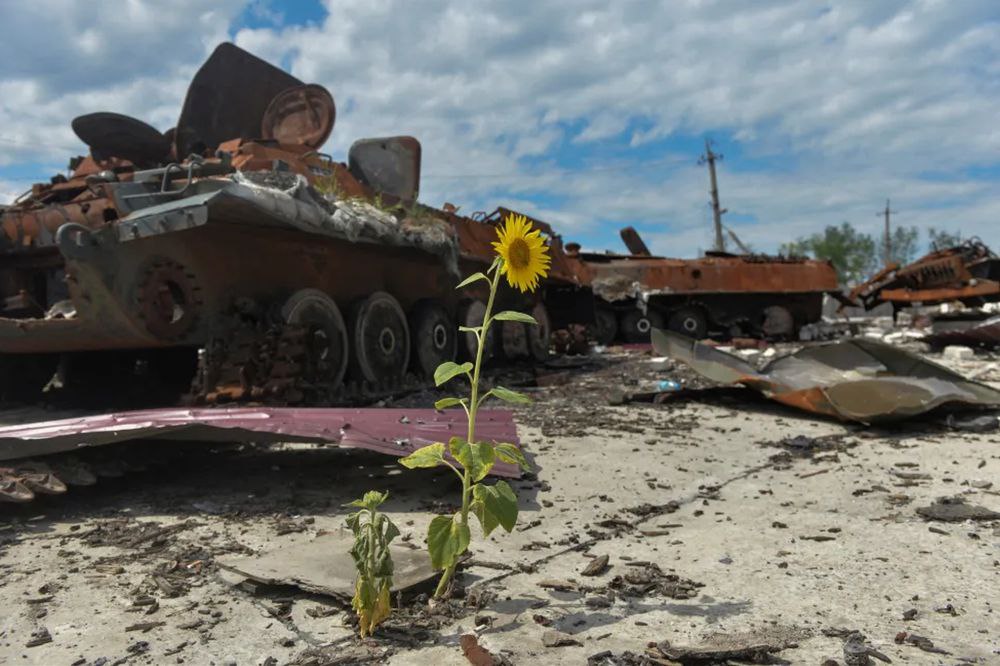
Ukraine has assessed more than ₴6.01 trillion (approximately $150 billion) in confirmed environmental damage caused by Russia’s full-scale invasion.
The Gaze reports this, referring to Ukraine’s Ministry of Economy, Environment and Agriculture, which published the figures of the State Environmental Inspectorate.
The destruction spans every major component of the natural environment. Verified losses include ₴1.29 trillion in damage to soils, ₴967 billion in harm to the atmosphere, ₴117.8 billion from pollution and contamination of water bodies, and ₴3.63 trillion resulting from the devastation of protected natural areas.
Several of the most severe cases stem from Russian strikes on oil depots and chemical storage facilities. After a missile hit an oil depot in the village of Kryachky in Kyiv region, toxic emissions reached over 41,000 tonnes, while soil contamination levels exceeded legal limits 17-fold.
Similar incidents occurred in Chernihiv, Sumy region, Rubizhne, and Sievierodonetsk, where attacks on ammonia and nitric acid tanks triggered major releases of hazardous chemicals into the air and soil.
The demolition of key hydraulic structures has had profound and lasting consequences. The Kakhovka Hydropower Plant dam breach in 2023 caused an unprecedented environmental and hydrological collapse across southern Ukraine and the wider Black Sea basin.
Environmental experts report that about 20% of Ukraine’s protected territories have suffered damage since the invasion began, including 2.9 million hectares within the EU’s Emerald Network.
Among the ecosystems worst affected are Kinburn Spit, Oleshky Sands, the Kakhovka Reservoir zone, Lower Dnipro wetlands, and numerous Ramsar-listed sites. Several major protected areas – including Askania-Nova and the Black Sea Biosphere Reserve – remain under Russian occupation.
Wartime explosions, fires, and industrial spills have significantly degraded agricultural soils, reducing fertility and increasing concentrations of heavy metals such as copper, lead, and nickel, as well as combustion byproducts and sulfur and nitrogen compounds.
The environmental impact has also extended beyond Ukraine’s borders: approximately 3 million tonnes of pollutants released by Russian attacks have dispersed into the atmosphere over neighboring European countries.
“At the end of 2024, environmental losses from the war amounted to ₴2.78 trillion. Today they already exceed ₴6 trillion, and unfortunately this figure continues to rise daily,” said Deputy Minister of Economy Ihor Zubovych. “The scale of destruction to Ukrainian nature will have consequences far beyond Ukraine itself.”
The ministry emphasized that the current estimate reflects only the damage recorded in government-controlled territory. The full scope will become clear only after Ukraine regains access to all occupied land and completes detailed assessments.
As The Gaze previously reported, Ukraine is preparing to file an unprecedented $44 billion claim against Russia for environmental and climate damage caused by Moscow’s full-scale invasion.
Ukraine increasingly pushes the issue of wartime ecological damage onto the global agenda. Earlier, Ukrainian documentary “Divia” exploring the devastating impact of Russia’s war on Ukraine’s natural environment was presented at the United Nations International Climate Conference in Belém, Brazil.