Russia Exploits Religious Institutions to Spread Disinformation in Europe, Expert Says
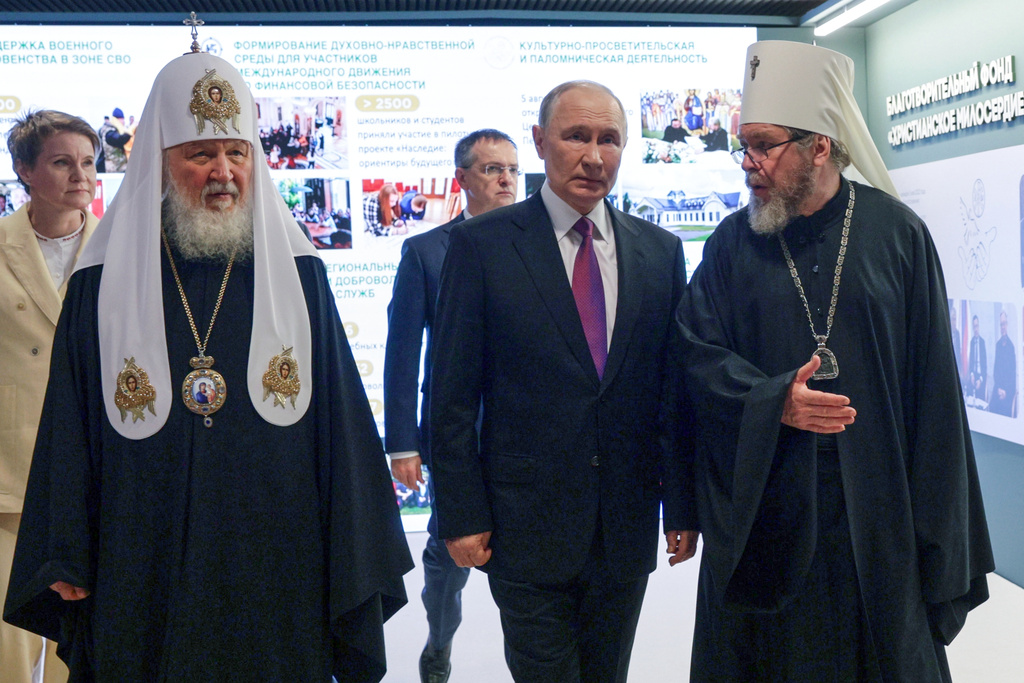
Ukraine warns that Russian hybrid influence operations in Europe increasingly involve religious organizations.
The Gaze reports on it, referring to Ukrinform.
Rena Marutyan, director of the Institute for National Resilience and Security, presented research in Brussels on Russian propaganda and disinformation targeting audiences in France, Spain, Belgium, and Hungary. She highlighted the role of Russian entities such as Rossotrudnichestvo and the Russian Orthodox Church (ROC), which actively promote narratives aimed at undermining European political stability and societal cohesion.
The expert noted that the Russian Orthodox Church is often positioned near critical infrastructure, including military sites, bridges, airports, and nuclear facilities, sometimes in coordination with the state corporation Rosatom.
Rossotrudnichestvo serves as a major soft power instrument, with Russian cultural centers established across Europe to extend influence.
“I believe that Rossotrudnichestvo is one of Russia's most powerful instruments of soft power. Just a few months ago, the Russian House opened in Brussels,” said the director of the Institute.
Marutyan emphasized that harmful narratives promoted by Russia include claims that EU support for Ukraine harms European economies and efforts to provoke interethnic and interfaith conflicts. Right-wing extremist actions, including attacks on synagogues in France, exemplify these destabilizing tactics.
Additionally, Russia spreads messages that the EU and NATO are weak and unprepared for conflict, aiming to discourage resistance to its aggression.
Concerns are mounting over the Russian Orthodox Church’s involvement in Russian military operations and intelligence activities. In Sweden, a church near the strategically important Vasteras NATO airfield has raised suspicions among intelligence officials, who believe it may be used for espionage. The Church of the Holy Mother of God of Kazan, funded in part by Rosatom and linked to Russian intelligence, is reportedly fenced off and closely monitored, with clergy receiving recognition from Russian intelligence agencies for their cooperation.
The ROC also became directly involved in the war against Ukraine. Priests participate in military propaganda, receive equipment for combat purposes, and coordinate closely with military units in occupied territories. The Crimean Metropolis, for example, oversees cooperation with the Russian army, including supplying drones and setting up dugout churches near front lines.
Furthermore, the Russian Orthodox Church is involved in shaping public opinion and indoctrinating youth in occupied areas, distributing literature that denies Ukrainian sovereignty and encouraging service in the Russian military. Ukrainian authorities report that over 1,300 ROC priests are actively engaged on the front lines, often acting as chaplains or intelligence operatives, illustrating the deep integration of the church into Russia’s military and political apparatus.
Read more on The Gaze: How Russia Twists Religion to Justify War: The Fake Narrative of Persecution in Ukraine