Russia and Belarus Intensify Information Attacks on Lithuania
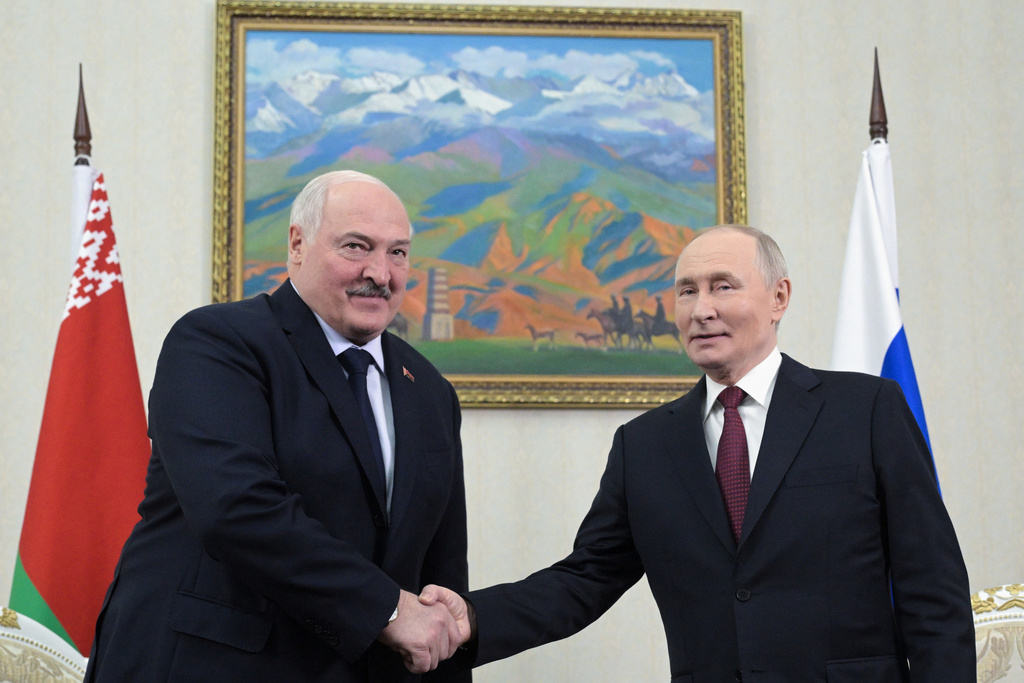
Russia and Belarus have intensified information attacks on Lithuania, focusing on the Kaliningrad transit and the Lithuania-Belarus border.
The Gaze reports on this, referring to Delfi.
Analysts from the Lithuanian army recorded 325 instances of hostile information in November, nearly half of which were related to military topics.
Russian and Belarusian media actively spread messages about potential restrictions on transit through Kaliningrad, presenting them as violations of bilateral agreements and EU-Russia accords, and as a threat to Russia.
Russia uses international law to legitimize its aggressive rhetoric and frame potential military actions as “lawful countermeasures,” creating the impression that Lithuania is provoking tensions.
At the same time, Belarus, in its information campaign, accuses Lithuania of artificially escalating tensions at the border, while positioning itself as a friendly mediator “caring” for drivers stuck at the border.
Both countries aim to portray Lithuania as a hostile state responsible for militarizing the region and escalating tensions.
Earler, on October 25, Lithuanian President Gitanas Nausėda proposed considering a prolonged closure of the border with Belarus and restrictions on transit to Kaliningrad due to a series of incidents involving Belarusian weather balloons used for smuggling.
President Nausėda described the recent disruptions at Lithuanian airports caused by contraband-carrying balloons as part of a hybrid attack against Lithuania, emphasizing the need for both symmetrical and asymmetrical responses.
Contraband weather balloons have become a primary channel for illegally transporting cigarettes from Belarus. Because of that Lithuania temporarily closed border crossings and Vilnius Airport, strengthened security, and installed physical barriers in response to these repeated disruptions. Lithuanian authorities also criticized Belarusian President Alexander Lukashenko for failing to prevent these incidents.
As The Gaze reported earlier, Lithuanian authorities have detained members of a Russian-linked network accused of planning multiple terrorist attacks across Europe. The group allegedly coordinated the delivery of improvised explosive devices disguised in parcels containing massage pillows and hygiene products in July 2024.
Read also on The Gaze: The Baltics are Preparing for Defense Against Russia