Why the European Union Cannot Afford "Ukraine Fatigue" in 2026
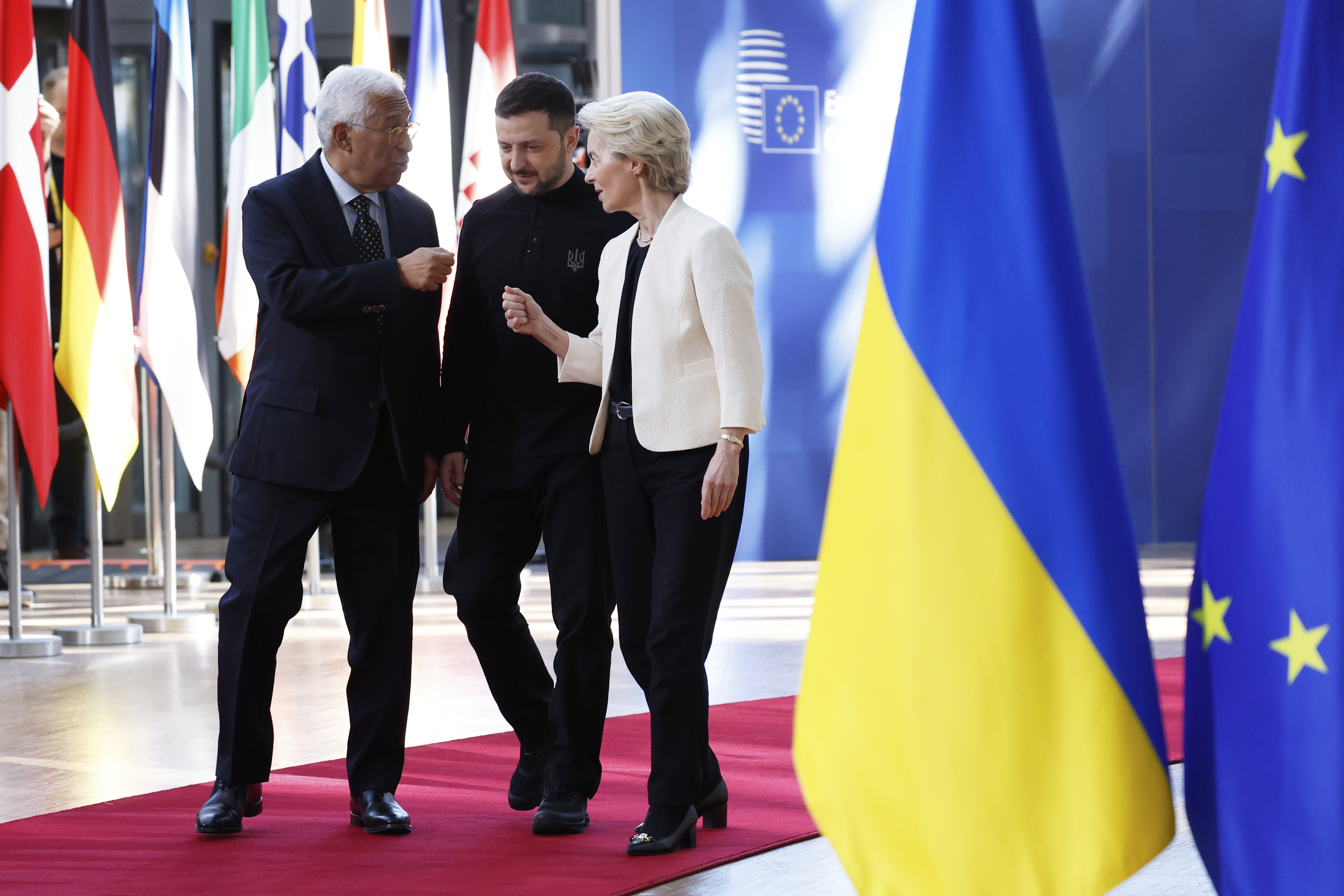
In 2026, the EU enters a phase in which the issue of supporting Ukraine ceases to be a topic of foreign policy and transforms into a test of the viability of the European project itself
After three years of a great war, part of the political elites in certain capitals is trying to convert public fatigue, economic pressure, and electoral fears into a new political line: to reduce aid to Kyiv, to transfer the war to the status of a "controlled frozen conflict," and to return to internal agendas. The formula looks tempting: fewer expenses, fewer risks, fewer unpopular decisions.
The problem is that such logic ignores a basic thing: Russia will not return to the format of a "manageable partner" with whom one can trade and negotiate as before 2022. It has already switched to a mode of long-term confrontation with the West, and the war against Ukraine has become for the Kremlin a tool for reformatting the security system in Europe. Reducing support for Ukraine will automatically mean not the winding down of the conflict, but a change in its geography and scale. Ukraine fatigue in 2026 is not an exit from the war, but an entry into its more expensive and dangerous phase for the EU.
Ukraine today performs the role of a buffer that holds back Russian military potential, nullifies the possibility of direct forceful scenarios against the Baltics, and reduces Moscow's chances of transferring Moldova and part of the Black Sea region into the format of controlled gray zones. If this buffer is weakened, the European Union will receive not "peace at Ukraine's expense," but a parallel set of crises – military, energy, political – already on its own border.
European Fatigue Is a Tool of Russian Geopolitics
The thesis about "Ukraine fatigue" is not a spontaneous reflex of European societies. It is a carefully cultivated construct that fits perfectly into the logic of Russian hybrid strategy. Moscow understands that Western democracies live by electoral cycles, short voter attention, and structural dislike for long, expensive, and incomprehensible wars. That is why the bet is placed not only on the front, but also on the slow erosion of political will in the EU.
This mechanism works through three levels. The first is informational. Into the public space, messages are systematically launched about the "futility" of supporting Ukraine, corruption, "fatigue" from refugees, allegedly inflated costs of military aid. The discussion is deliberately shifted from the plane of security to the plane of everyday discomfort: rising tariffs, budget restrictions, cuts to social programs. Ukraine is presented not as a shield, but as a burden.
The second level is political. Parties that play on fears and isolationist sentiments receive additional arguments: supposedly, "we are protecting the national interest," offering to reduce involvement in the war. Part of the traditional elites, especially in countries with a high level of business dependence on Russian markets in the past, willingly picks up this rhetoric as an opportunity to get out of an uncomfortable situation and at the same time preserve formal loyalty to Ukraine in the form of declarative support without real content.
The third level is economic. Russia works with those who are interested in restoring trade, logistics, energy schemes. Even if there is no direct cooperation now, business groups see a benefit for themselves in the war "ending somehow," just so that the opportunity to earn again appears. It is they who push their political representations toward soft forms of pressure: reducing aid, blocking individual decisions, delaying sanction packages.
As a result, "fatigue" becomes a political tool that objectively plays into the Kremlin's hands. Its consequence may be not peace, but the fixation of the war in a format advantageous for Russia: preservation of occupation, a pause for rearmament, legalization of the right to revenge in the medium term. The EU, which in 2026 succumbs to "Ukraine fatigue," essentially signs off on recognizing Russia's right to dictate by force the configuration of borders in Europe.
The Risk of Restoring Russian Potential and Increasing the Vulnerability of the Baltics and Moldova Remains
Any reduction in support for Ukraine must be considered not as a humanitarian or budgetary gesture, but as a change in the balance of power in Eastern Europe. In practice, this means: the fewer resources Ukraine receives, the more time and opportunities Russia receives to restore its strategic potential. After several years of high-intensity combat operations, the Russian defense-industrial complex has already switched to a war economy mode. Reducing pressure from Ukraine's side will give Moscow a chance not just to compensate for losses, but also to modernize military capabilities, relying on support from third countries and sanctions circumventions.
The Baltic states will feel this first. Their security rests on two things: NATO's presence and the Kremlin's conviction that a real war with the West is too expensive. If Russia gets a respite, and the EU demonstrates a refusal from a hard line, this conviction will begin to erode. Scenarios of hybrid operations against Lithuania, Latvia, and Estonia, pressure through transit, provocations around the Suwałki corridor or the Baltic Sea will cease to be theoretical exercises of military analysts and will become an element of real planning in Russian headquarters. Every kilometer that Ukraine did not get the opportunity to defend potentially turns into kilometers of a new front for NATO.
Moldova in this chain is a weak link. If the Ukrainian shield weakens, Chișinău finds itself alone with a set of threats: from energy blackmail and economic pressure to scenarios of political coup supported by pro-Russian networks. The Transnistrian factor, which for a long time remained a "frozen" problem, can be quickly relaunched as a lever of influence on the entire security architecture in the region. Russia's de facto control over Moldova would mean an expansion of its influence in the Black Sea basin, creating additional pressure on Romania and increasing risks for Ukraine's south.
For the EU, this turns into the necessity of a sharp increase in military presence on the eastern borders, reformatting of budgetary priorities, constant risk to investments and logistics. In other words, what can be relatively controllably contained on Ukrainian territory will have to be contained already inside the Union itself. The cost of such a scenario – in finances, politics, trust in institutions – will be many times higher than continuing support for Ukraine in 2026.
Ukraine Is the Most Effective Format of European Security in 2026
From the point of view of cold geopolitical arithmetic, Ukraine in 2026 is for the European Union the most effective and cheapest tool for deterring Russia. The Ukrainian army every day reduces Russian military potential, tests and adapts new formats of warfare, forces the Kremlin to spend resources that could be converted into pressure on other directions. This is not a moral, but a purely pragmatic function. The question is only whether the EU is ready to honestly admit: its own security today rests on Ukraine's ability to continue this work.
In three years of war, Ukraine has become a testing ground for working out a new type of European defense: from the integration of air defense systems and long-range means to the development of unmanned platforms, electronic warfare, and cyber protection. Part of these solutions is already returning to Europe in the form of specific lessons for armies and defense companies. If this process is interrupted, it will not be "peace" that wins, but the old Russian approach to war, where mass, artillery, and readiness for large human losses will again begin to dictate the rules. In such a scenario, the EU will be forced either to accept Russian forceful dominance on the periphery or to invest in its own militarization at a level to which it is not yet ready politically and psychologically.
There is one more dimension – political. If the European Union in 2026 gives a signal that it has "tired" of Ukraine, this means that it is no longer capable of performing the role of a political pole that protects not only its own borders, but also the rules of the game. Any authoritarian state watching this will draw a simple conclusion: it is enough to drag out the conflict, make it expensive and complicated for democracies, and sooner or later they will begin to seek a "compromise," even if it means legitimizing aggression. After such a signal, it will be much harder for the EU to convince anyone in the world that international law or security guarantees have real value.
Bohdan Popov, Head of Digital at the United Ukraine Think Tank, communications specialist and public figure