Russia Sends Abducted Ukrainian Kids to Camps in Belarus and North Korea
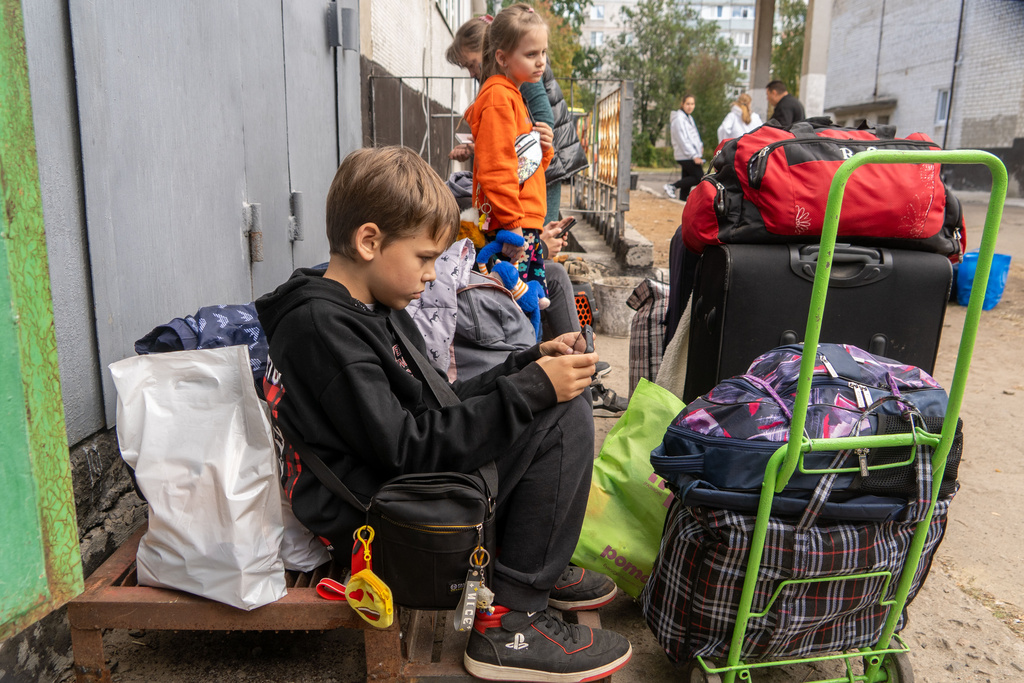
There are secret camps in North Korea and Belarus where Russia sends abducted Ukrainian children from temporarily occupied territories.
The Gaze reports on it, referring to Ukrinform, citing the Center for Strategic Communications on Facebook.
Russia is holding Ukrainian children not only on its own territory, but also in Belarus and North Korea. In total, at least 165 camps have been documented where children are taught military practices, their identities are changed, and they are systematically separated from their Ukrainian environment.
At a US Senate hearing, Kateryna Rashevska, an expert at the Regional Center for Human Rights, showed photos of 12-year-old Mykhailo from Donetsk Oblast and 16-year-old Liza from occupied Crimea, whom the Russians sent to the Songdowon camp in North Korea, 9,000 km from home.
There, the children were taught to “destroy Japanese soldiers” and introduced to veterans who participated in the attack on the American ship Pueblo in 1968.
Rashevska emphasized that Russia justifies the illegal transfer of children as “evacuation,” but does not comply with any requirements of international humanitarian law. In particular, this concerns the Russian side's refusal to provide lists to the ICRC, reunite families, and monitor the needs of children.
“Instead, there is deportation, granting of Russian citizenship, adoption, and complete Russification,” she said.
Ukrainian Ambassador to the US Olga Stefanishyna reported that approximately 1.6 million Ukrainian children are under Russian control. According to her, children are being “reprogrammed” in schools, camps, social institutions, and even foster families, while any means of evacuation and communication are being blocked.
Russian occupation authorities are transfering Ukrainian children from the temporarily occupied parts of Zaporizhzhia region to Russia, planning to send about 400 children by the end of the year. Meanwhile, these officials installed by Moscow announce this as a new “recreational program” for minors, stating that the children will be hosted in Russia’s Yaroslavl region.
However, Ukrainian analysts warn that behind the language of tourism lies a deliberate and systematic relocation effort aimed at removing children and placing them under long-term Russian influence.
Moreover, according to a new study by Yale University, which relies on open-source data and satellite imagery, the number of places where Ukrainian children are being held in Russia has risen sharply, with more than 210 locations identified. However, the actual number may be even higher, as there are multiple sites still under investigation.
Ukraine claims that since the start of the full-scale war, Russia has deported or forcibly relocated at least 19,500 children, while Yale University estimates the number to be closer to 35,000.
As The Gaze reported earlier, Lithuania was to provide comprehensive physical and psychological rehabilitation for more than 300 Ukrainian children who were rescued from Russian-occupied territories.
Read more on The Gaze: Why Ukraine’s Victory Matters for International Law