Seven EU States Urge Use of Frozen Russian Assets to Fund Ukraine “Reparations Loan”
Seven European Union member states have called on the bloc’s top leadership to unlock frozen Russian assets in order to finance a new “reparations loan” for Ukraine.
The Gaze reports this, referring to Reuters and European Pravda.
In a joint letter addressed to European Commission President Ursula von der Leyen and European Council President António Costa the leaders of Estonia, Finland, Lithuania, Poland, Ireland, Latvia, and Sweden pressed the EU to act swiftly ahead of the December European Council summit.
The document was signed by Estonian Prime Minister Kristen Michal, Finnish Prime Minister Petteri Orpo, Lithuanian President Gitanas Nausėda, Polish Prime Minister Donald Tusk, Ireland’s Taoiseach Micheál Martin, Latvian Prime Minister Evika Siliņa, and Sweden’s Prime Minister Ulf Kristersson.
The signatories stress that the EU has stood by Ukraine since Russia’s full-scale invasion in 2022, but that the scale and urgency of Kyiv’s current military and budgetary needs require a more robust and sustainable mechanism.
“We strongly support the Commission’s proposal to provide a reparations loan funded by revenues from frozen Russian assets in the EU,” the leaders wrote, arguing that such a step would be both financially viable and politically achievable.
According to the letter, using immobilized Russian state and oligarchic assets would uphold the principle that Ukraine has a legitimate right to compensation for the destruction caused by Moscow’s aggression.
The leaders state that a decision in December would help strengthen Ukraine’s defence posture and its leverage in future peace negotiations. They also pledged to “work constructively” with other member states to secure agreement.
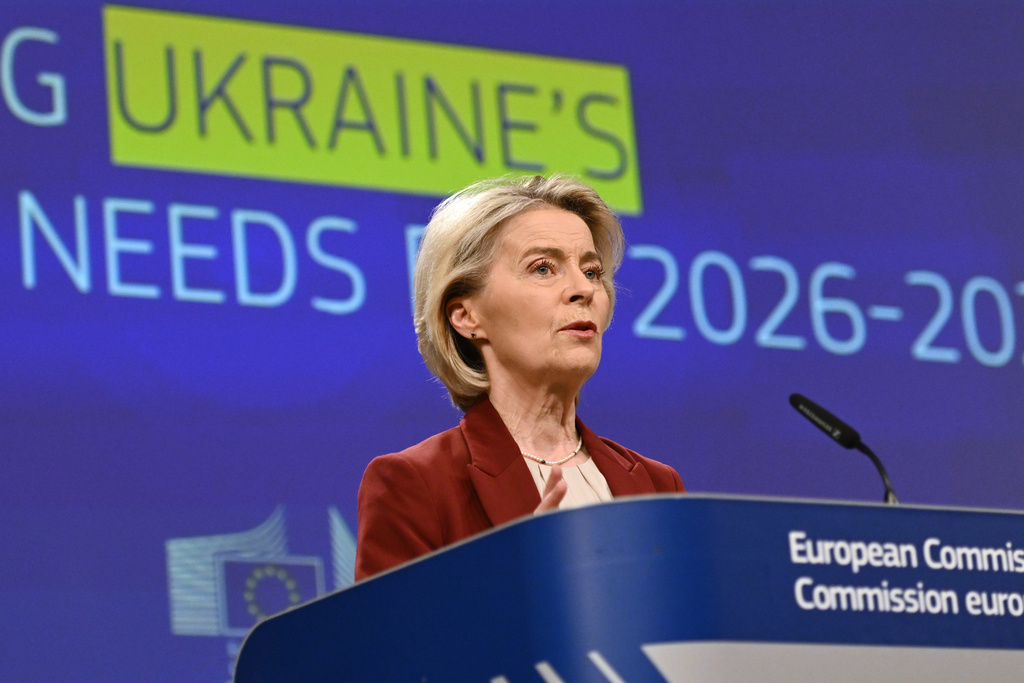
The proposal is part of a broader initiative outlined by the European Commission on 3 December regarding Ukraine’s financing in 2026–2027. One of the options explicitly calls for channeling proceeds from frozen Russian assets toward a special loan package for Kyiv.
However, the idea has already sparked resistance. Belgium publicly declared the proposal unacceptable, and reports suggest the United States has privately urged several EU capitals to slow or block the plan over concerns about precedent and legal risks.
Despite the divisions, the seven governments argue that the EU must act decisively to ensure Ukraine can continue defending itself and push for a just and lasting peace.
As The Gaze reported earlier, Belgian Prime Minister Bart De Wever warns that rushing a plan to use frozen Russian assets to fund Ukraine could jeopardize future peace talks, while the European Commission works to address Belgium’s concerns.
Read also on The Gaze: Von der Leyen Announced Two Financing Mechanisms for Ukraine for 2026–2027