The Baltic is Becoming a Battleground Between NATO and Russia
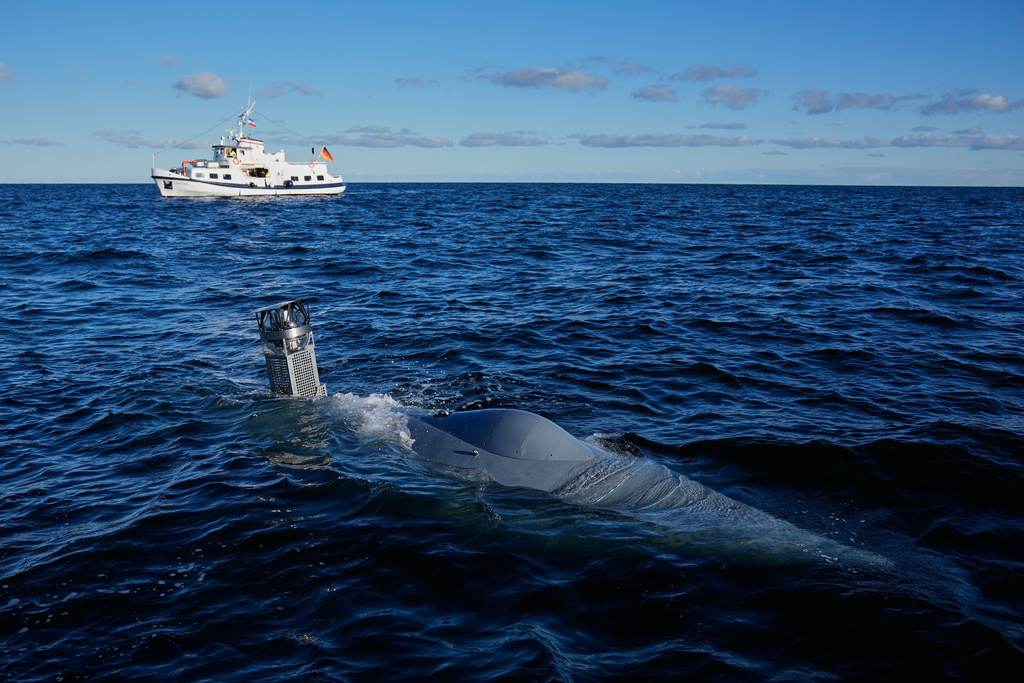
Poland, Sweden and others are buying subs to protect pipelines.
The Gaze reports on it according to the Economist.
For countries such as Poland, monitoring the Baltic Sea and its underwater space is a pressing national security issue. The sea is teeming with telecommunications and energy infrastructure. The Balticconnector gas pipeline connects Finland and Estonia. Another, Baltic Pipe, transports gas from Norway to Poland. Communication and power lines are laid on the seabed. This year, Estonia, Latvia, and Lithuania disconnected their power grids from the Russian network; of the four lines connecting them to the European grid, three run underwater.
On paper, NATO's presence in the Baltic region has never been stronger. Of the nine coastal states, all except Russia are members of the Alliance. But while NATO has a clear advantage in the Baltic Sea when it comes to conventional naval forces, Russia has the means to cause chaos. Since 2023, there have been at least 11 suspected acts of sabotage against infrastructure in the Baltic Sea, many of which are linked to Russia's shadow fleet — a network of tankers that Moscow uses to circumvent Western sanctions. The most significant incidents were damage to the Baltic connector and the power cable connecting Finland and Estonia, likely caused by ships dragging their anchors across the seabed. Both took months to repair.
Hybrid attacks allow Russia to deny its involvement, test the effectiveness of NATO's mutual defense clause, and assess the readiness of each Alliance country for confrontation. But Russian dictator Vladimir Putin's regime is also beginning to act more openly. In early October, Danish military intelligence reported that Russian warships had targeted Danish naval vessels and helicopters with their weapons, simulating a collision.
Russia will soon have more targets to choose from. Germany, Denmark, Sweden, and Finland are building new wind farms in the Baltic Sea. Poland is even more vulnerable—almost half of its energy imports depend on Baltic pipelines and ports, and this dependence is growing. By 2040, the country could invest more than $100 billion in offshore wind farms and new LNG terminals. Poland's first nuclear power plant, expected to open by 2036, will be located less than 2 km from the coast.
Some countries have proposed more radical measures. After drones were spotted over Denmark, Ukrainian President Volodymyr Zelensky proposed closing the Baltic Sea to Russian shadow fleet tankers. Estonian Defense Minister Hanno Pevkur also called for this.
However, such a blockade would almost certainly violate international law. The UN Convention on the Law of the Sea guarantees ships, even those subject to sanctions, the right to pass through international straits if they do not threaten the use of force and do not violate safety rules. Russia, which uses the Baltic Sea for 60% of its maritime crude oil exports, would likely view the closure of the straits to shadow fleet tankers as an act of war.
A more reasonable response would be to ban ships that do not meet technical standards, according to Jacek Siewiera, former head of Poland's National Security Bureau.
This approach is gaining popularity. In October, Denmark tightened controls on tankers in the Skagen harbor area, which connects the North Sea to the Baltic Sea. Meanwhile, Poland is strengthening its naval capabilities. A bill passed by the country's parliament in November allows the navy to use force to protect critical infrastructure, even outside Poland's territorial waters.
Recently, Commander of the Royal Navy General Gwyn Jenkins warned that the Main Directorate for Deep Sea Research of the Russian Ministry of Defense (GUGD) is prepared to deploy underwater vehicles capable of damaging critical underwater infrastructure.
As the Gaze reported earlier Armed Guards Seen on Russian Shadow Tankers, Navies Confirm.
https://thegaze.media/news/armed-guards-seen-on-russian-shadow-tankers-navies-confirm