Ukraine's Accession to JEF — This Is Embedding into the Northern Containment Contour
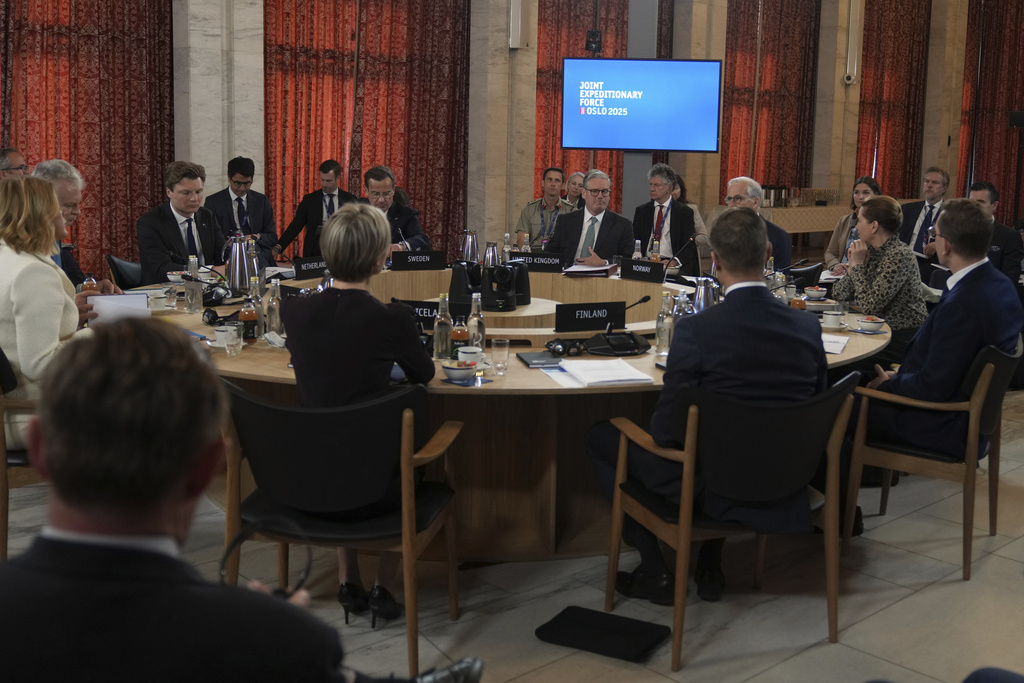
Ukraine integrates into JEF as an enhanced partner, embedding its combat experience into the rapid containment system of the Baltic-Northern theater
Ukraine has received Enhanced Partnership status in the Joint Expeditionary Force — a British-centric mechanism of ten Northern European states. The decision was adopted on 4–5 November in Bodø, Norway, and publicly recorded by the governments of the participating countries: from now on, joint trainings are planned, interaction in the protection of critical infrastructure, cooperation in the sphere of UAVs, operational medicine, and countering disinformation. For Kyiv, this is integration into the nervous system of containment in the Baltic-Northern theater; for JEF — access to frontline experience that accelerates collective learning.
JEF — This Is Not a “Mini-NATO,” but Precisely Its Flexibility Turns Speed into Political Effect
Unlike an alliance with a guarantee of the Article 5 type, JEF is not a permanent army but a high-readiness framework where the principle of rapid response operates: Great Britain and at least one other participant can quickly assemble and deploy forces without lengthy consensus procedures. Command capability relies on the British Standing Joint Force Headquarters, and the scale of individual operations is determined by state contributions. The strong side — reactivity in rapid scenarios and regional missions; the weak — limited “volume” for protracted multi-theater operations. Therefore, JEF is most effective as an accelerator in the NATO and EU ecosystem, where decision speed combines with industrial mass and legal frameworks.
The Baltic-Northern Theater Already Dictates the Agenda — Underwater and in the Air
Following incidents on underwater pipelines and cables in recent years, JEF has deployed air-sea response operations synchronized with enhanced NATO vigilance measures in the Baltic region. We are talking about patrolling energy carrier routes and the “data backbone” — optics, gas, electricity — where Russian pressure combines hybrid tools with risks of underwater sabotage. This theater is natural for JEF, and it is here that Ukrainian experience in using unmanned aerial systems, logistics, field medicine, and information resilience has the highest applied value.
With the creation of the Ukraine–NATO Council, Kyiv participates in rapid consultations and ally decisions; in parallel, on the EU side, the four-year Ukraine Facility worth up to 50 billion euros operates, combining budget support, investment incentives, and technical assistance into a single long-term framework. This “massive” part of integration complements the “rapid” part provided by JEF and pulls the defense-industrial contour to demand standards.
Over three years, the British Operation Interflex has trained over 56 thousand Ukrainian servicemen together with 13 partners; in parallel, the EU mission EUMAM has exceeded 60 thousand trained and declared an ambition to increase monthly training rates. Interoperability is now measured not by communiques but by battlefield results, and Ukraine's participation in JEF opens the possibility of transferring training cycles and tactical air defense standards for ports, energy nodes, and sea hubs to the Baltic-Northern direction.
The Political Signal to the Kremlin Lies in the Long Horizon of Support, Not in a One-Time Action
Enhanced Partnership status — this is a coded message that Europe is laying a long axis of support for Ukraine into its own security architecture. Coordination of patrols, trainings, and possible formation of standardized “rapid deployment packages” consisting of maritime, air, and C-UAS components — this is preparation for scenarios of prolonged tension. Britain itself is already shaping plans for future trainings after completing the largest JEF activity to date, Tarassis, and Ukraine's participation as a learning enhancer and tactical testing ground makes containment tangible.
But JEF's flexibility does not replace mass. If the task becomes multi-month protection of underwater communications with parallel air operations on several sectors, the voluntary contribution model runs into limits of equipment, crews, and ammunition. To transform JEF into a structural guarantee for Ukraine and the northern flank, more binding commitments on personnel and high-readiness platforms are needed, pre-standardized force packages, and a funded joint stock of critical components and ammunition for prolonged missions. This is a matter not of declarations but of planning, calendars, rotations, and publicly announced numbers.
In This Configuration, Ukraine Is Not “Asking to Join the Club” but Brings What Europe Has Lacked Until Now
The Ukrainian armed forces have developed tactics that will define security at sea and on land in the coming years: from massive FPV swarms to anti-drone solutions, from dispersed logistics to operational medicine. This applied advantage complements the industrial one: while the EU launches long investment cycles, Ukraine already maintains the pace of serial productions pulled by real war demand and supported by the new EU financial framework. That is why integration into JEF is not “aid to Kyiv” but an import into Northern waters and skies of methods that have already proven effectiveness.
Russia's hybrid pressure on underwater cables and energy lines, combined with periodic demonstrative flights and drone reconnaissance, creates “composite loading” on the Northern countries. Standardized “JEF responses” — this is an opportunity to bypass the inherent slowness of large multilateral formats and instill as habit rapid patrol missions, air rotations, and reconnaissance-observation when several sections of critical infrastructure are under threat at once. Ukrainian participation strengthens precisely the segment where experience and tactics outweigh platform “luxury.”
Europe has already reconfigured its security architecture around Ukraine's success with concrete budgets, trainings, and patrols. JEF provides speed, the EU — financial-industrial mass, NATO — the politico-military framework. By adding Kyiv as an expanded partner, Europe has raised the stakes: now it is necessary to shift readiness from episodic to planned — with regular cycles, joint stocks, and commitments for years ahead.
Igor Popov, head of United Ukraine Think Tank, expert on political and security issues