Ukrainian–Turkish Drone Alliance: How UAV Cooperation Can Reshape the Global Arms Market
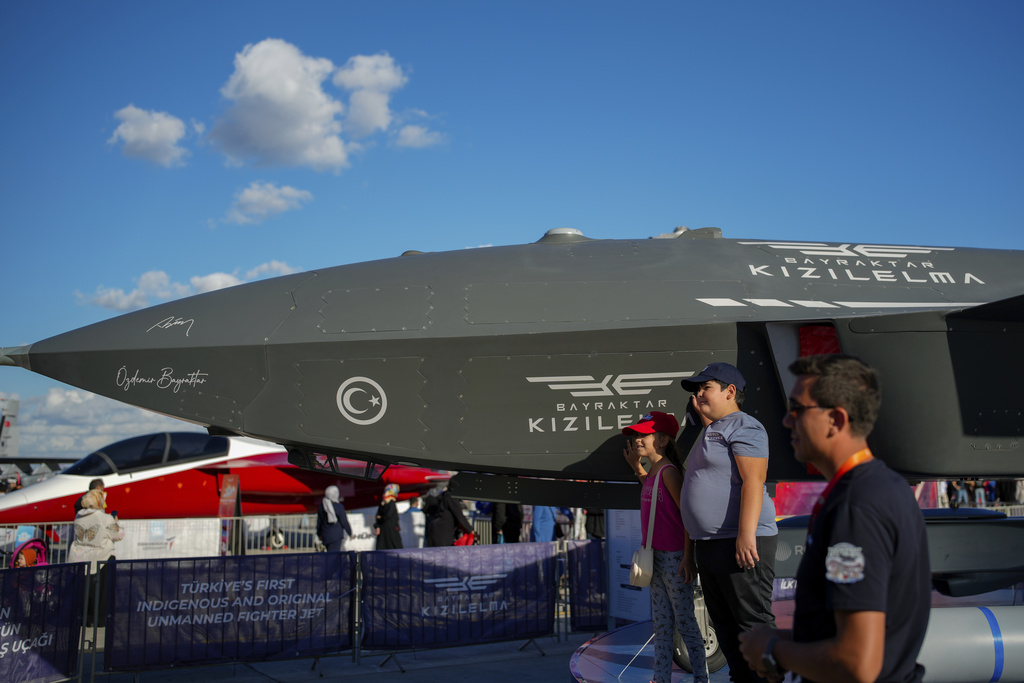
Combining Ankara's industrial power with Kyiv’s frontline adaptability in a UAV alliance capable of opening the path to technological dominance and overturning the global arms market
Ukraine and Turkey enter the war and the postwar period with incredibly different but mutually complementary strong sides. Turkey today controls about 60 percent of the world's export supplies of strike unmanned aerial vehicles according to the latest data, and is approaching the production of over a million drones per year. This is no longer just a large defense state, but an industrial player of global scale. Ukraine, in turn, has transformed into a combat laboratory of unmanned systems, which are tested daily on the front and evolve monthly in response to new Russian tactics.
The combination of these two components – Turkey's industrial power and Ukraine's combat experience – creates a unique opportunity that no other pair of states has today.
Turkey Has Become a Key Center of the Global Drone Industry, and This Is Changing the Balance of Power in Military Technologies
Turkey's Rise in the UAV Field Cannot Be Ignored. Over the last five years, Ankara has advanced from a regional level to a global orbit: Baykar, TAI, and other Turkish players have demonstrated not only serial production, but also professional export management, flexible logistics, scaling of production lines, and the ability to supply partners with armaments in real time. When Reuters writes that Turkey is 60 percent of the world's exports of strike drones, this is not an exaggeration. This is the result of large investments, political will, and industrial discipline.
In perspective, Turkey is realistically capable of exceeding the million mark in UAV production per year, and this figure means that Ankara will have weight not only as an exporter, but as a technological regulator of the market.
Ukraine Is Already Building Its Own Drone Ecosystem, Which Operates at Paces That Have No Analogues in Europe
The Ministry of Defense of Ukraine has officially stated: the Ukrainian industry is capable of manufacturing up to ten million drones per year. This is ambitious, and most importantly – realistic, considering the frontline evolution of the Ukrainian military-industrial complex. In 2024, Ukraine produced about 2.2 million UAVs of various types; in 2025, more than 4.5 million FPV and strike unmanned aerial vehicles are planned solely for defense needs.
Ukraine Produces Samples of Almost All Major Classes of Unmanned Systems
The most massive direction is FPV drones – strike apparatuses that destroy Russian equipment on an industrial scale. Reconnaissance unmanned aerial vehicles provide artillery correction and create constant situational awareness on the front. Strike reusable aerial apparatuses – tools of long-range action, with the ability to return after an attack. In addition, Ukraine produces one-way deep strikes, bombers, sea drones, ground robotic complexes.
The state has concluded contracts with more than thirty manufacturers of FPV drones, over a dozen manufacturers of "bombers," and individual engineering groups that are working on new platforms. This is not just industry. This is the foundation of future Ukrainian military exports.
Ukrainian-Turkish Cooperation Already Exists De Facto – and Has the Potential to Move to the Level of Design Schools
Existing projects – a joint venture with Baykar, the construction of a factory in Ukraine, a memorandum on the integration of production lines – are already creating the basis for deep technological integration.
Turkey brings serial production and export stability. Ukraine brings combat conditions, engineering adaptability, and ruthless quality testing.
In the world, there is no other model where two countries perform such different roles, but complement each other so effectively.
After the War, Ukraine and Turkey Will Face a Choice: Compete or Integrate. And Competition Will Become a False Path for Both.
At first glance, it seems that after the end of the war, both states may find themselves on different sides of the market. Ukraine has enormous potential in FPV drones, long-range strike systems, and engineering solutions. Turkey has a brand, global sales, marketing power, and an established reputation.
If they begin to compete, the consequences will be predictable: Ukraine risks losing access to part of critical technologies and the international market. Turkey, in turn, risks losing a unique frontline laboratory that makes its drones competitive.
Rivalry will force both countries to play at dumping and fight for the same contracts. Result: both sides lose. Cooperation is beneficial for both because it allows the creation of a single military-technological cluster that has no competitors in Europe.
Why Is Cooperation the Most Promising?
Because Ukraine and Turkey together can create a single production-export vertical. Ukraine is a proving ground, an engineering center, adaptability, frontline testing, innovative developments, rapid scaling. Turkey is serial production, financial capacities, export licenses, global reputation, established customer base.
By uniting these strong sides, the countries can reach the level of a technological bloc – a conditional "drone NATO," which no other pair of states can create.
This will give Ukraine access to the market, capitalization of its own technologies, creation of jobs, and formation of a large postwar export industry. Turkey will receive strengthening of its status as a world leader, expansion of production chains, reduction of risks, and preservation of competitive advantage.
As a result, the Ukrainian-Turkish alliance in the UAV field can become a strategic tool for deterring Russia and a guarantee for Ukraine in the postwar period.
This partnership is not about "friendship," but about benefit and global influence. Russia will be forced to respond to the emergence of a technological bloc capable of producing hundreds of thousands and millions of drones per year, combining Turkish production capabilities with Ukrainian combat experience.
For Ukraine, such cooperation is a path to independence from Western bureaucratic cycles, a security guarantee, and a way to establish itself as one of the key players in the global defense market.
Ukraine and Turkey have already created the foundation. The next stage is to build a joint drone civilization that will define the war of the future.
Dmytro Levus, foreign policy expert, analyst at kyiv-based United Ukraine Think Tank