"Visegrad Four" Germany, and Austria to Strengthen Control Over Illegal Migration
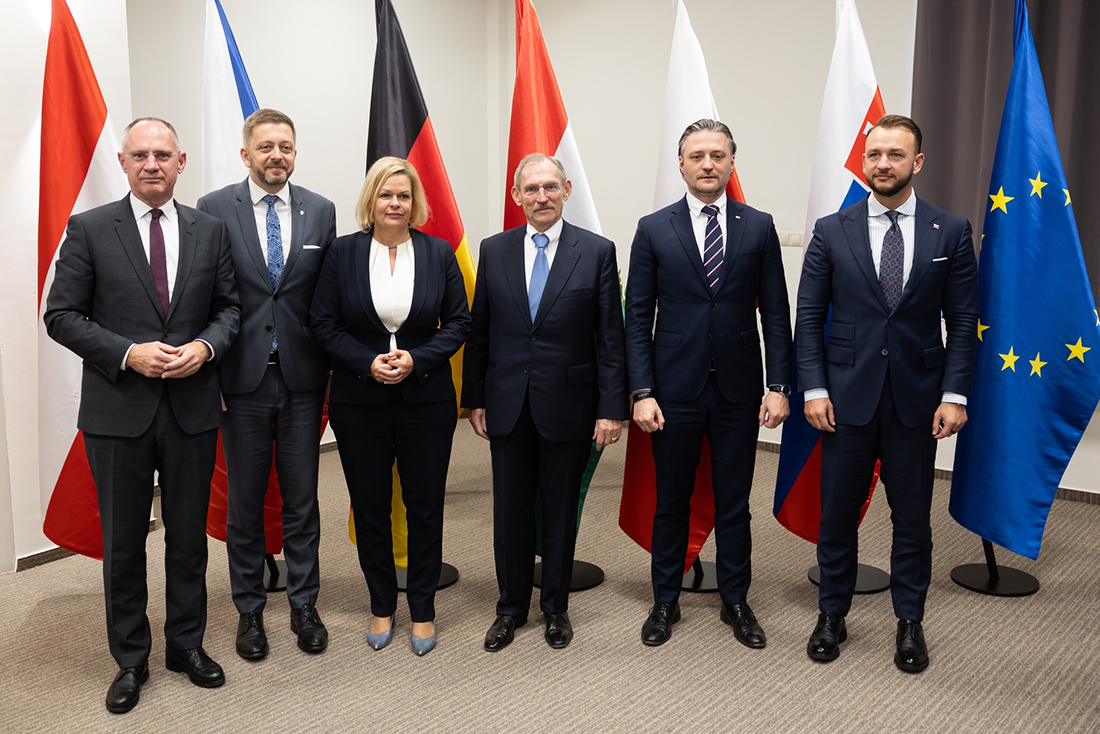
The interior ministers of the V4 countries (Poland, Slovakia, Czech Republic, Hungary) along with Austria and Germany have agreed to enhance measures to combat illegal migration and human trafficking.
This was reported by AP.
The interior ministers of the six countries participated in a summit in the southern Hungarian city of Szeged, near the border with Serbia. During the meeting, they discussed the increasing influx of migrants through the so-called Balkan route, leading from Serbia to Hungary.
The initiative for the meeting came from the Minister of the Interior of the Czech Republic, Vít Rakušan. According to him, migration is a "common challenge" for the entire bloc, and decisions made should be focused on preventing the illegal entry of migrants into the EU territory.
"We all are on the same migration route. We share borders, and the situation on the external border of the EU affects all of us," said Rakušan.
The Czech minister emphasized that decisions on the reinstatement of internal border checks within the Schengen area were not effective. Instead, the authorities of the six countries plan to concentrate on protecting the external borders of the bloc.
At the same time, Hungary's Minister of Foreign Affairs, Shandor Pinter, stated that Budapest cannot agree to a compromise regarding the distribution of migrants across the entire territory of the European Union to alleviate the burden on countries most affected by migration.
"Hungary cannot accept the mandatory nature of relocation. This is a question of sovereignty for Hungary," said Pinter.
Recall that in October, it became known that Slovakia introduced temporary controls at the common border with Hungary due to the influx of illegal migrants. In just nine months, at least 40,000 people entered the country.
This was preceded by Poland, the Czech Republic, and Austria introducing selective checks on all roads along the Slovak border to curb the influx of illegal migrants.
Before this, Germany also decided to strengthen controls at the borders with Poland and the Czech Republic. In the first seven months of 2023, the number of asylum applications in Germany increased by 78%, and the number of registered illegal border crossings reached 14,700.