Armed Guards Seen on Russian Shadow Tankers, Navies Confirm
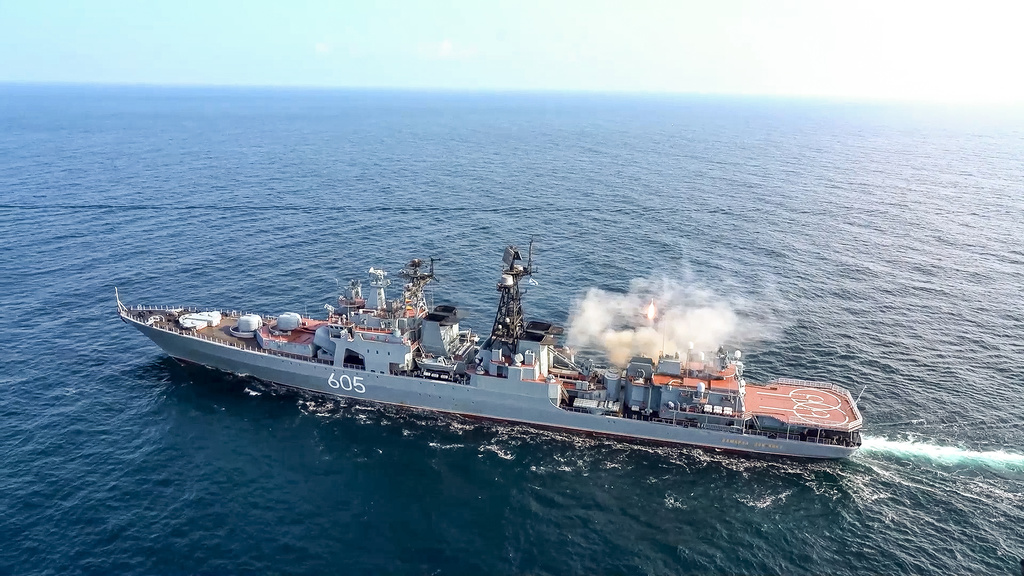
The Swedish Navy has reported that Russia is conducting a sustained military operation in the Baltic Sea to protect its so-called “shadow fleet,” including armed personnel aboard tankers and other vessels.
The Gaze reports on it, referring to SVT Nyheter.
According to the Swedish Navy, Russian military ships are actively patrolling specific areas of the Baltic Sea to safeguard the country’s shadow fleet, which includes oil tankers posing potential risks.
Armed personnel in military-style uniforms, reportedly from private security companies, have been observed on board some of these vessels. Similar reports had previously emerged in Danish media, highlighting the growing concern over Russia’s maritime operations.
The operation reflects a more permanent Russian naval presence in key zones of the Baltic Sea and the Gulf of Finland.
“The presence of the Russian fleet has become more permanent and visible in a significant part of the Baltic Sea,” says Marko Petkovic, head of the Navy’s operations department.
Military sources indicate that this activity involves continuous monitoring of shipping lanes, suggesting a strategic effort to maintain control and protect shadow fleet operations. Authorities stress that while the presence is significant, it does not currently pose an immediate threat.
Officials emphasize the importance of the shadow fleet for Russia. Daniel Stenling, deputy head of the Coast Guard operations department, noted that the deployment of personnel in uniform underscores the strategic value Moscow places on these vessels.
The heightened security measures and increased naval activity illustrate Russia’s commitment to protecting its maritime assets in the region.
Since Russia’s full-scale invasion of Ukraine, it has rapidly expanded a “shadow tanker fleet” to bypass oil sanctions and price caps. This fleet, largely composed of old and uninsured vessels, poses significant environmental risks, including accidents and oil spills, and has also been linked to sabotage of Western underwater infrastructure.
Oil revenues from these operations remain a major source of funding for Russia’s military industry, though sanctions have limited export capacity and seriously increased logistical costs.
As the Ukrainian President Volodymyr Zelenskyy announced, Russia is set to lose at least $37 billion in oil and gas revenues in 2025, reflecting a significant drop in production and processing since the start of the war. He emphasized that both international sanctions and targeted Ukrainian measures are working effectively to weaken Russia’s energy sector and limit its ability to fund military operations.
As The Gaze reported earlier, on December 15, the EU has expanded sanctions against Russia, targeting both additional five individuals and four entities responsible for supporting Russia’s shadow fleet and its value chain.
Read also on The Gaze: Russian Shadow Fleet Could Launch Drones and Transport Weapons