Russia Targets Indian Goods, India Boosts Naval Power with Russian Submarine Lease
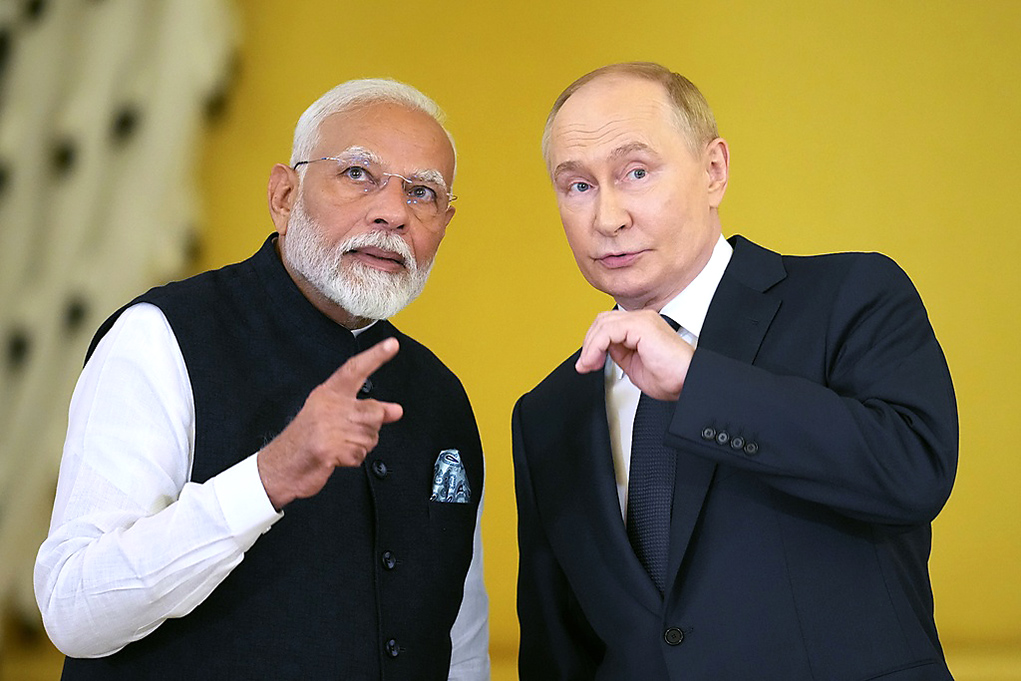
Russia and India are seeking to increase trade volumes and expand the range of goods in mutual transactions, while strengthening inter-state military cooperation.
The Gaze reports on it, referring to Reuters.
During Russian President Vladimir Putin's state visit to New Delhi, both countries confirmed their goal of bringing bilateral trade to $100 billion by 2030. In recent years, commercial ties between the countries have grown more than fivefold, from approximately $13 billion in 2021 to nearly $69 billion in 2024–2025.
"This is not a momentary story, but a strategic choice in developing relations between the two countries," said Deputy Kremlin Chief of Staff Maxim Oreshkin and added that India's share in Russian imports does not exceed 2%.
Most of this growth was driven by Indian imports of energy resources. However, bilateral trade slowed to $28.25 billion between April and August 2025 due to a decline in oil imports amid sanctions and high tariffs imposed by the administration of then-US President Donald Trump.
At the same time, India is looking for new markets to export goods affected by these restrictions, while Russia is seeking to balance trade by increasing imports of Indian industrial and consumer goods, including automobiles, electronics, data processing equipment, heavy machinery, industrial components, textiles, and food products.
In particular, India currently accounts for 20% of the shrimp market in Russia, and there is potential for growth. Indian companies are forced to look for alternative markets after high US tariffs affected supplies to the United States.
Meanwhile, there have been reports of progress in military relations between the two countries. Specifically, India and China have finalized an agreement for India to lease a nuclear submarine worth approximately $2 billion. This contract was signed back in 2019, but due to complex negotiations and pricing issues, delivery was delayed.
The submarine will be used for training purposes and to improve the Indian Navy's nuclear submarine operating skills over a period of 10 years. India currently operates 17 diesel-electric submarines, and nuclear submarines provide strategic deterrence, enabling the formation of a full nuclear “triad” capability.
Putin's visit, scheduled for December 4, 2025, is not the first to underscore the desire of both countries to strengthen economic and defense cooperation amid global economic and geopolitical challenges.
Earlier, the Russian Security Council secretary held talks in Moskow with his Indian counterpart, National Security Advisor Ajit Doval, to discuss security and defense issues between the Kremlin and New Delhi. He called for further strengthening of security cooperation between India and Russia amid New Delhi's ongoing trade dispute with the US over Russian oil purchases and economic sanctions imposed by Donald Trump's administration.
As The Gaze previously reported, Ukraine discovered Indian-manufactured or assembled electronic components in Iranian-designed drones used by Russia in attacks on Ukrainian territory.
Read more on The Gaze: India and Russia: Situational Dependence Instead of a Strategic Alliance