Unpacking Trump National Security Strategy 2.0 on Ukraine and Russia
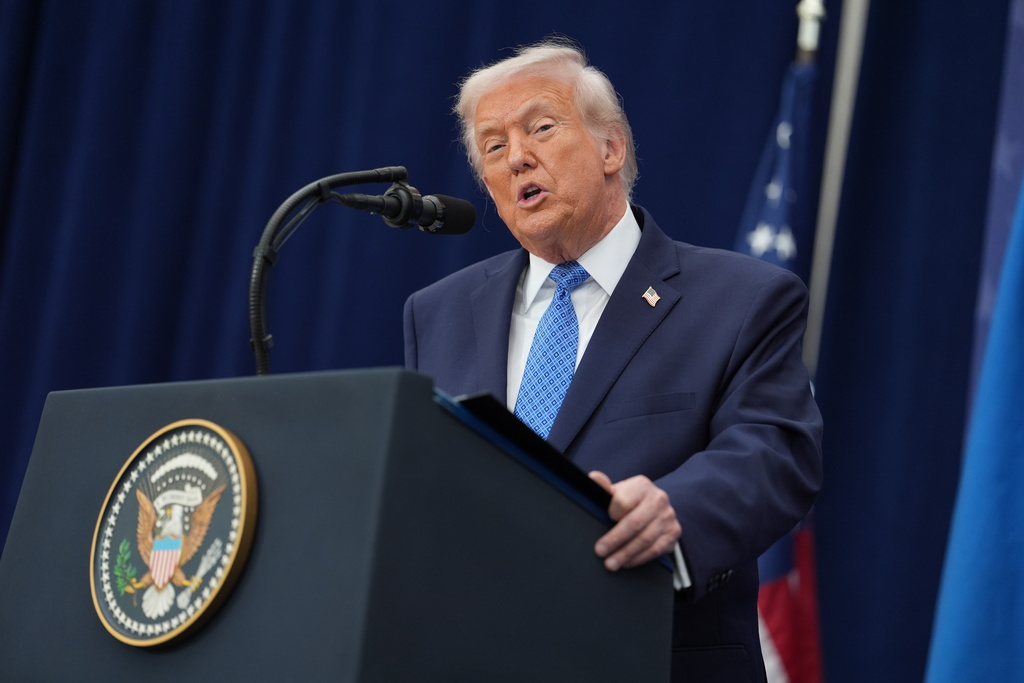
The United States’ new National Security Strategy positions Russia and the war in Ukraine as central challenges for restoring long-term stability in Europe.
The Gaze reports this, referring to the 2025 strategy document released by the White House.
According to the strategy, the administration seeks an “expeditious cessation of hostilities” in Ukraine and a broader diplomatic effort to reestablish “strategic stability across the Eurasian landmass.”
The document states that bringing the war to a close quickly is now a core U.S. national interest, framing the conflict as a destabilizing force for European economies and a risk factor for dangerous escalation between Russia and NATO.
It emphasizes that Washington aims to “negotiate an expeditious cessation of hostilities in Ukraine,” stabilize Europe’s security environment, and enable “post-hostilities reconstruction of Ukraine to ensure its survival as a viable state.”
While reaffirming support for Ukraine’s sovereignty, the strategy marks a clear break from previous long-term, open-ended military frameworks, focusing instead on preventing the conflict from expanding and reducing Europe’s exposure to its economic fallout.
The strategy presents Russia not as a global peer competitor, but as a regional power whose aggression has destabilized European security. It highlights Europe’s “significant hard-power advantage” over Russia in all areas except nuclear weapons, and argues that mismanagement by European governments – not Russian capabilities alone – has deepened the continent’s vulnerabilities.
Washington’s objective, the document says, is to reestablish conditions for strategic stability with Moscow, prevent unintended escalation, and reduce Europe’s long-term dependencies that the war has amplified. This includes addressing the consequences of Europe’s energy crisis and industrial relocation toward China, trends described as “perverse effects” of the ongoing war.
The strategy criticizes what it calls Europe’s lack of “civilizational self-confidence,” weakened defense posture, and political volatility. It asserts that many European governments maintain “unrealistic expectations for the war,” driven by fragile coalitions that “suppress opposition,” preventing democratic demands for peace from translating into policy.
Post-war Ukraine is described primarily in strategic terms: the U.S. aims to ensure that Ukraine emerges from the conflict stable enough to function as a secure, sovereign state in Europe. Economic revival, infrastructure reconstruction, and political viability are highlighted as necessary components of long-term security – once hostilities end.
Overall, the strategy signals a recalibration of American policy away from indefinite confrontation and toward managed competition with Russia. The emphasis shifts to controlling escalation risks, restoring predictable relations, and helping Europe regain economic and political stability.
As The Gaze previously reported, a fresh round of discussions between Ukraine’s negotiating team and envoys representing U.S. President Donald Trump has wrapped up in Miami, Florida.
Read more on The Gaze: Trump’s Push to End the Ukraine War Is Sowing Fresh Fear About NATO’s Future