EU Still Sending €1.5 Billion a Month to Russia for Fossil Fuels, von der Leyen Says
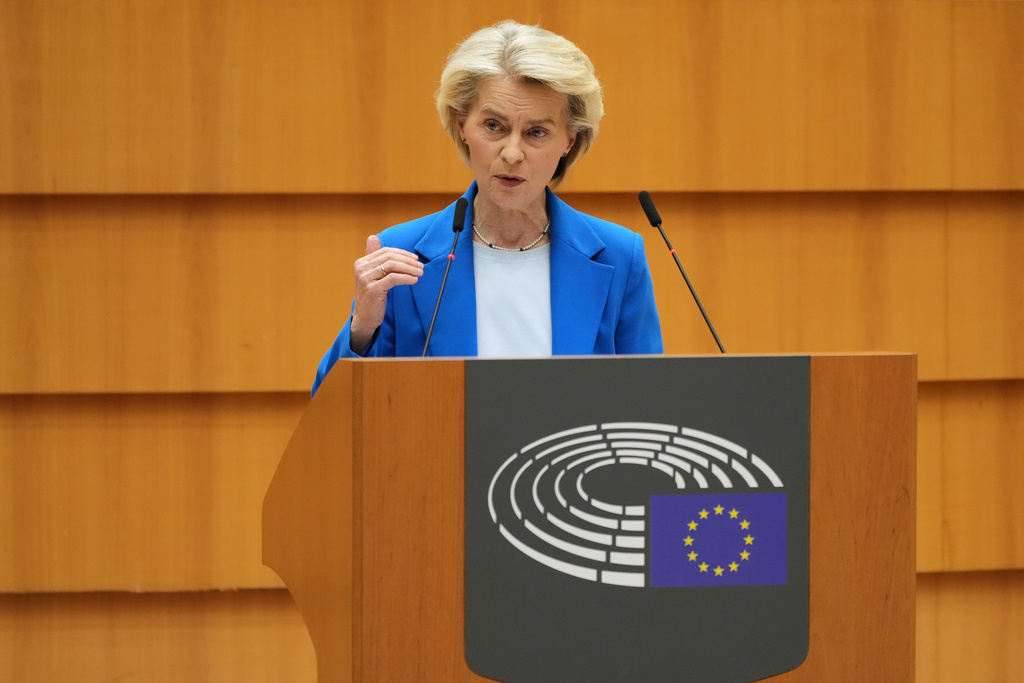
European Commission President Ursula von der Leyen has revealed that the EU continues to pay Russia around €1.5 billion each month for fossil fuel imports.
The Gaze reports this, referring to von der Leyen’s official statement.
Speaking on Wednesday, she highlighted a new political agreement within the EU to eliminate Russian fossil fuels entirely, calling it the start of “a new era – an era of Europe’s complete energy independence from Russia.”
According to her, the EU’s shift away from Russian supplies has already been dramatic. Imports of Russian natural gas – both LNG and pipeline – have dropped from 45% before the full-scale invasion to 13% today. Coal imports have fallen from 51% to zero, and crude oil from 26% to just 2%.
She stressed that these reductions have directly undermined revenues that Moscow uses to finance its war against Ukraine.
“As we slashed Russian imports of fossil fuels massively, we also cut the revenues that Russia uses to wage its war of aggression against Ukraine. We were paying Russia EUR 12 billion per month at the beginning of the war for fossil fuels – now we are down to EUR 1,5 billion per month, still too much, and we aim to bring it down to zero,” von der Leyen said.
Her remarks follow Tuesday’s provisional deal between the EU Council presidency and European Parliament negotiators to gradually end imports of Russian gas by the end of 2027.
The measure introduces a six-month transition after the law’s adoption, followed by staggered deadlines for different types of contracts. Short-term LNG imports concluded before 17 June 2025 will be prohibited from 25 April 2026, while pipeline gas will be blocked from 17 June 2026.
Long-term LNG contracts fall under the EU’s 19th sanctions package and will be halted from 1 January 2027; pipeline gas bans under long-term contracts will take effect on 30 September 2027, or no later than 1 November depending on storage levels.
The proposal restricts amendments to existing contracts to narrowly defined operational needs and forbids any increase of Russian gas volumes in the final permitted years. Both LNG and pipeline imports will be subject to a pre-approval mechanism, with at least one month’s notice required for Russian gas covered by transitional exemptions and shorter notice periods for non-Russian imports.
EU member states will also be required to submit national diversification plans for gas and oil and disclose all remaining Russian gas contracts within a month of the law taking effect.
For his part, Hungarian Prime Minister Viktor Orbán has threatened legal action against the EU’s plans to phase out Russian gas.
As The Gaze previously reported, during the Russian-Ukrainian war, the European Union spent more on imports from Russia than it provided to Kyiv in financial and military support.
Read more on The Gaze: Why Ukraine Should be allowed to district of Russian Oil Refineries – Benefits for the US and EU