Inside Ukraine’s EU Strategy: Taras Kachka Explains the Lviv Format
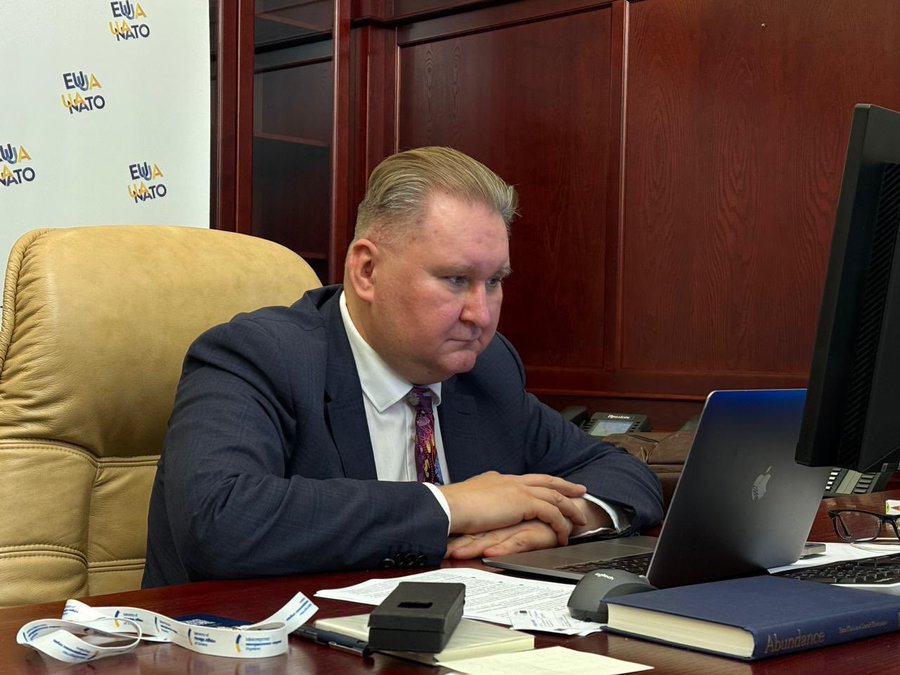
Deputy Prime Minister for European and Euro-Atlantic Integration Taras Kachka explained the new "Lviv Format," created to accelerate Ukraine's integration into the European Union.
The Gaze reports on it, referring to European Pravda.
In December 2025, Ukraine and the EU launched this “Plan B,” which allows the country’s EU accession process to move forward even if some member states temporarily block official negotiations.
“Its main goal is not to bypass anything, but to establish a procedure where Hungary’s veto no longer blocks the entire process of a candidate country’s path to accession,” Kachka said.
The “Lviv Format,” as the Deputy Prime Minister called it, is based on the EU’s practice from previous enlargements, when unanimous blocking by a single member state could delay negotiations for years.
Under standard procedures, a candidate country should receive the Draft Common Position (DCP) via an official letter at an intergovernmental conference. This procedure was blocked by Hungary’s veto.
Since summer, work had been underway to find alternatives, which led to a solution in changing the very format of DCP delivery.
“If the EU position cannot be delivered officially, the European Union can provide Ukraine with a briefing on the content of these benchmarks—that is, deliver them to us orally rather than by letter,” Kachka explained.
This allows Ukraine to continue moving forward in meeting EU requirements and opening negotiation chapters in preparation for accession.
Currently, the “Lviv Format” has already been launched for three clusters, while work on the other three will continue during the Cypriot Presidency in January 2026. According to Kachka, Ukraine will report monthly on progress in completing tasks and benchmarks to EU member states.
Deputy Prime Minister also emphasized that Ukraine has ambitious plans to accelerate the EU accession process under the “Lviv Format.” The next negotiation cluster is scheduled to open at the end of February–early March, ahead of previous EU expectations.
Hungary’s veto is not a threat, as unanimity is not currently required. When Hungary’s vote is needed to open clusters, it may be obtained either after the country’s upcoming elections or through broader geopolitical agreements.
"They say that if the issue of war and peace is so important to Orbán, then his contribution to the peace process could be to start voting for the opening and closing of negotiation chapters," he explained.
Next year, as the Deputy Prime Minister predicts, Ukraine is expected to see the first fully opened and closed negotiation chapter for EU accession.
Notably, during the meeting in Lviv, the EU Commissioner Marta Kos and Ukrainian Deputy Prime Minister Taras Kachka presented a priority reform plan to guide Ukraine through the newly launched technical phase of EU accession talks. The plan focuses on ten key reforms aimed at strengthening the rule of law, enhancing judicial independence, and reinforcing anti-corruption institutions.
As The Gaze reported earlier, Ukraine asserts that its process of joining the European Union may be completed faster than previously expected.
Read more on The Gaze: How Ukraine Is Integrating into the EU Prior to Official Membership