Russian Language as a Tool of Power: Africa in Moscow’s Sight
Moscow increasingly advances its interests in Africa through the Russian language and education.
The Gaze reports on it, referring to the Foreign Intelligence Service of Ukraine.
An inaugural conference of the Pan-African Association of Russian Language and Literature Teachers was held in Cairo. During the event, an organizational structure was established, an agenda was outlined, and a roundtable was held to discuss projects aimed at promoting the Russian language across the continent.
This event coincided with the intensification of Russian information operations in Africa. In 2023, Moscow launched the “African Initiative” – an information agency that opens offices in countries with pro-Russian governments, including Niger, Burkina Faso, and Mali. The organization focuses on training local journalists, organizing educational programs for Africans in Russia, supporting arms trade, and promoting the activities of the “African Corps.”
Saint Petersburg State University is actively involved in these projects. It develops professional infrastructure for Russian language teachers and also helps spread Russia’s state ideology through educational programs and its participation in the preparation of the Explanatory Dictionary of the State Language of the Russian Federation.
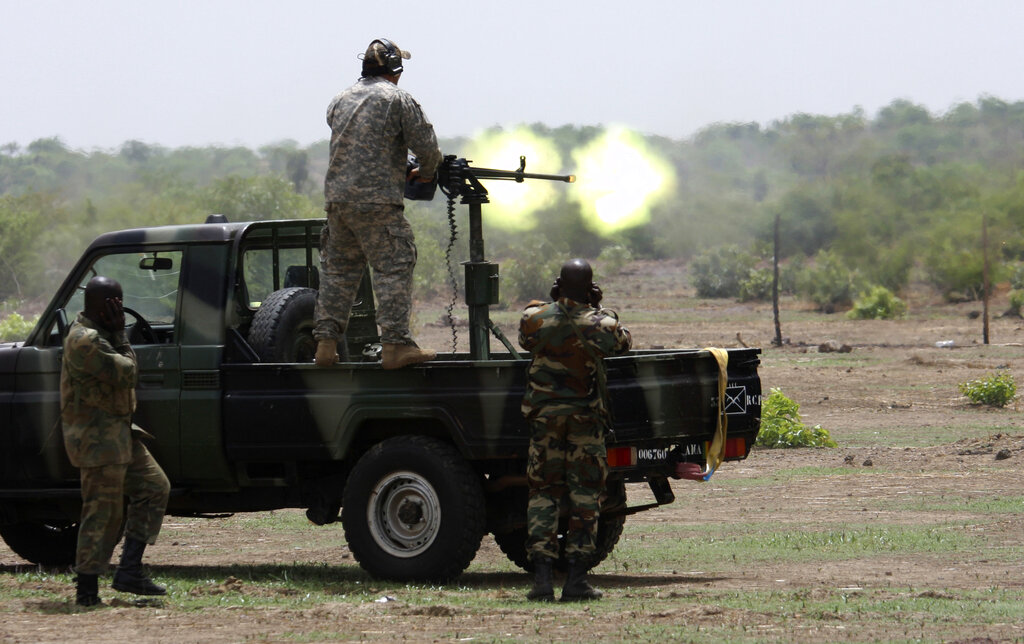
At the same time, Moscow is focusing on the deployment of the “African Corps” in the Central African Republic and Mali. This mercenary unit, controlled by the Russian Ministry of Defense, has been involved in numerous cases of violence, including torture and abduction of local residents, under the guise of “counter-terrorism efforts.”
“African countries should already consider the possible consequences and approaches to the so-called ‘protection of Russian speakers’ that Russia may promote in the future on the continent,” the statement reads.
Ukraine’s military intelligence agency (HUR) also warned that Russia is quietly building a pro-Kremlin elite across Africa by targeting the continent’s youth and academic institutions. Through state-funded educational programs in fields like agriculture, engineering, pedagogy, and medicine, Russia aims to cultivate a generation of African professionals aligned with Moscow’s political and ideological interests.
Russian language courses and teacher training initiatives at prominent universities are part of a broader effort to synchronize African educational systems with Russian standards.
In addition to education, Moscow is expanding its influence through youth sports programs and other cultural initiatives, using these as tools of hybrid warfare and soft power. Analysts say the Kremlin leverages historical Soviet ties and economic incentives to tilt African countries’ positions in its favor.
Notably, Russia’s newly formed African Corps, deployed to Mali after the decline of the Wagner Group, was accused of committing widespread atrocities against civilians, including abductions, executions, rapes, and village burnings. Witnesses reported that the unit operates alongside Malian troops, using methods similar to or worse than Wagner’s. Unlike Wagner, the African Corps is officially part of the Russian Ministry of Defence, making Moscow directly responsible for any crimes.
Read also on The Gaze: How Russian Propaganda Works at Home and Abroad