Internal Docs Show Vietnam-Russia Deal to Bypass US and EU Sanctions
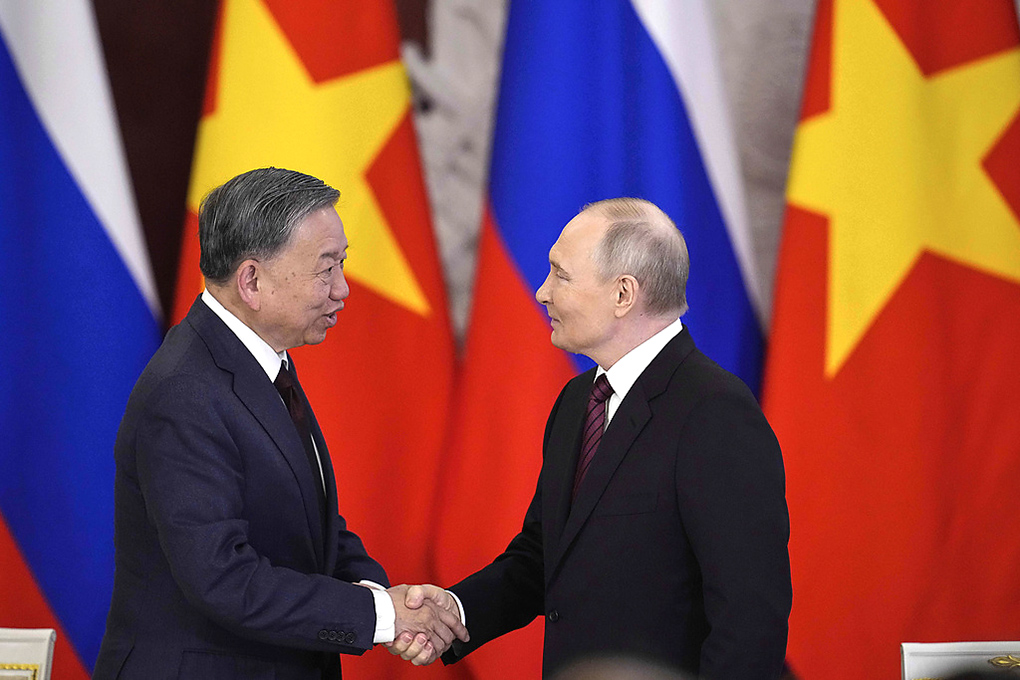
Russia and Vietnam are using unconventional financial schemes to circumvent Western sanctions in the field of defense procurement.
The Gaze reports on it, referring to the Associated Press.
According to internal Vietnamese documents, the agreement between Russia and Vietnam provides for the use of Vietnam's profits from the Rusvietpetro joint oil venture in Siberia to repay loans for the purchase of Russian military equipment.
This mechanism allows transactions to be avoided through the global SWIFT system, which is controlled by the US and other Western countries, keeping payments confidential.
According to the plan, Vietnam's profits are first sent to Moscow to repay the loan. Profits exceeding the amount of loan payments are transferred to the Russian state-owned company Zarubezhneft.
Zarubezhneft then returns these funds to Petrovietnam (PVN) through its joint venture in Vietnam, effectively bypassing international financial channels.
According to PVN CEO Le Ngoc Son, this approach is considered safe in the context of Western sanctions, as the money circulates only within Russia and Vietnam.
"This payment method is considered relatively confidential and appropriate because money only circulates within the territory of Vietnam and Russia and Vietnam does not have to worry about the risks of being affected by the U.S. embargo,” he stated.
News that such an agreement was in the works leaked in 2023. But instead of shutting it down, an internal document shows that Russia and Vietnam finalized and implemented it, expanding it with additional agreements.
It is important to note that this cooperation is taking place against the backdrop of growing tensions in US-Vietnam relations, with Washington seeking to strengthen its position against China and conducting trade negotiations with Hanoi.
The mechanism outlined in the documents may also be intended to avoid the possibility of future sanctions and the threat of secondary sanctions.
“If you want to insulate yourself from any kind of risk, you then basically avoid cross-border transactions and create these kind of offsetting payment schemes,” said Ben Hilgenstock, a senior economist at the Kyiv School of Economics who is an expert on Russian sanctions.
As The Gaze reported earlier, Russia is increasingly reviving barter trade in its foreign dealings, swapping goods such as wheat for Chinese cars and flax seeds for building materials, as Western sanctions and banking restrictions make traditional payments harder to process.