Russia Developing Space Weapon to Disrupt Starlink, NATO Warns
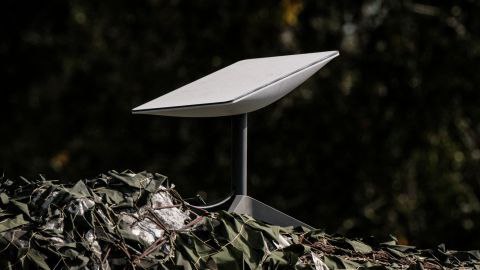
Russia is working on a new type of anti-satellite weapon designed to disrupt Starlink, a satellite communications system that has become critical for Ukraine’s battlefield connectivity.
The Gaze reports this, citing Associated Press (AP), which in turn referenced intelligence assessments from NATO member states.
The findings indicate that Moscow is exploring an experimental “area-effect” weapon that could deploy vast numbers of tiny, high-density projectiles into orbit. Such a system would be capable of damaging or disabling multiple satellites at once, while also posing serious risks to other space assets.
Security analysts caution that deploying this type of weapon could trigger widespread and largely uncontrollable consequences in low Earth orbit. The debris created could threaten satellites belonging not only to Western countries, but also to Russia itself and its partners, including China, raising doubts about whether Moscow would ultimately choose to use the system.
According to intelligence officials, the project remains under active development, though no timeline for deployment has been disclosed and there is no public evidence that live tests have taken place.
The projectiles involved are believed to be only a few millimeters in size, making them extremely difficult to track with existing ground-based or orbital monitoring systems. This would complicate efforts to quickly and conclusively attribute responsibility for any satellite failures.
“If satellites begin malfunctioning across the same orbital region, the cause may not be immediately visible – but the pattern would speak for itself,” said Clayton Swope, a space security expert at the Center for Strategic and International Studies.
Experts note that a satellite’s most fragile components, particularly solar panels, would likely suffer the greatest damage. Even limited impacts could be enough to render satellites inoperable, reducing network capacity without completely destroying spacecraft.
Starlink satellites operate at an altitude of roughly 550 kilometers, a region crowded with both commercial and governmental systems. Analysts warn that debris generated at this level could also endanger other orbital platforms, including crewed space stations operating at lower altitudes.
Some analysts believe the program may serve as a form of strategic intimidation rather than a weapon intended for immediate use. By demonstrating the capability to disrupt satellite constellations like Starlink, Moscow could exert pressure on adversaries without crossing the threshold of an overt space attack.
For Ukraine, the stakes are particularly high. Starlink has become a backbone of frontline communications, enabling command-and-control, drone operations, and battlefield coordination. Any sustained disruption could have immediate operational consequences.
As The Gaze previously reported, Polish Foreign Minister and Deputy Prime Minister Radosław Sikorski described Poland’s financial contributions to Starlink in Ukraine as “one of the best-spent investments.”
Read also on The Gaze: Estonia to Provide €3 Million to Support Ukraine’s Starlink Network