US Wants to Use Belarus as an Example to Show Putin What Awaits Him In the Event of a Peace Agreement
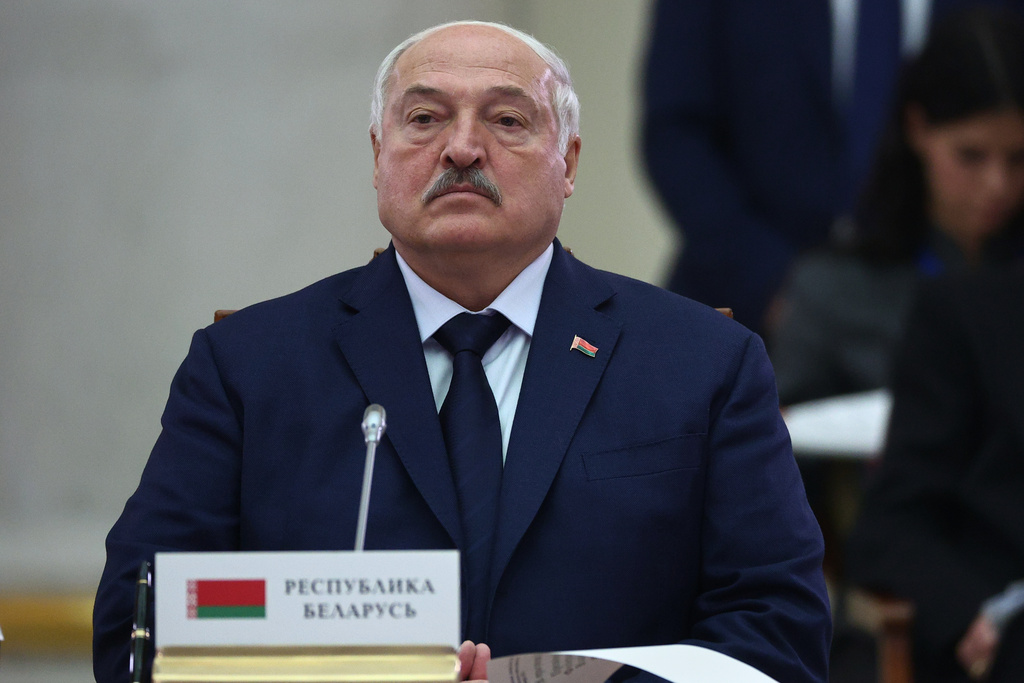
To improve relations with Lukashenko, the United States offered the Belarusian dictator a weight loss drug.
The Gaze reports on it according to WSJ.
The White House hopes that the example of Belarusian dictator Alexander Lukashenko will show Kremlin leader Vladimir Putin what rewards he can expect if he agrees to peace in Ukraine. The Wall Street Journal explained how and why the US is providing economic support to Minsk, one of the most repressive regimes in the world.
‘Putin will eventually find himself in a situation where he will have to make a very difficult decision. It is important to have someone he knows best and trusts most... to say positive things about the agreement,’ says one American official.
It is noted that with Donald Trump's arrival in power, Lukashenko wanted Washington to ease sanctions against some of his country's most profitable companies and to be able to repair his plane. In return, he was willing to give up his only resource: political prisoners.
Trump appointed John Cole, an experienced lawyer who represented the US president in lawsuits against social networks, as his ambassador in negotiations with Lukashenko. He hosted dinners with the Belarusian dictator, during one of which Lukashenko asked, ‘Have you lost weight?’ Trump's representative replied, ‘Yes.’ He pointed out that he had been helped by Zepbound, a drug that has been proven to help fight obesity. If Cole had succeeded, it could have been a test for the Trump administration's main goal — bringing Putin and Russia's £2 trillion economy out of isolation. And perhaps, American officials thought, there was a way to help the 71-year-old head of state, who was interested in losing a few pounds. They decided to consider organising the supply of Zepbound for Lukashenko's personal use," the journalists write.
Last month, Lukashenko released 123 prisoners, including Nobel Prize winner Ales Beliatski and opposition activist Maria Kolesnikova. In return, the US lifted sanctions on potash and agreed with Boeing to supply software and spare parts to the state-owned airline Belavia. Lukashenko's personal plane is also undergoing repairs.
According to the publication, Lukashenko advised the US on how to approach Putin and helped organise the US-Russia summit in Alaska. He also gave advice on Venezuelan dictator Nicolas Maduro, who is currently surrounded by American warships. Lukashenko suggested that Maduro move to Minsk during an interview he gave to Cole's wife. Lukashenko helped organise the US-Russia summit in Alaska. He also gave advice to Venezuelan dictator Nicolás Maduro, who is currently surrounded by American warships. Lukashenko suggested that Maduro move to Minsk during an interview with Cole's wife.
Immediately after Trump's inauguration, the Belarusian Foreign Ministry called the State Department through a channel normally used for military conflict resolution to say that Minsk hoped for a thaw in relations. The State Department responded that it wanted to see Belarus take the first step. As it turned out, both Moscow and Minsk were prepared to release some political prisoners in order to improve relations with Trump's entourage.
Later, Cole returned to Minsk when Lukashenko promised to release 14 more prisoners, including leading dissident Sergei Tikhanovsky, in exchange for easing sanctions against the state airline.
Cole reported to Trump about his trips to Minsk over dinner. Trump asked about the prisoner exchange and opportunities for diplomacy with Russia. He then asked Cole for Lukashenko's number so he could call him himself. During the 10-minute conversation, they exchanged pleasantries and praised each other's strength. Trump proposed a personal meeting and said that Belarus should consider another, more extensive release of prisoners.
As the Gaze reported earlier Zelenskyy Presents 20-Point Peace Framework for Ending the War.